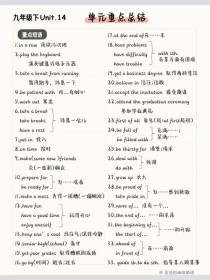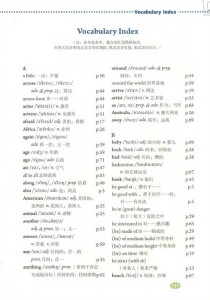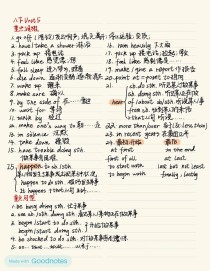
仁爱八年级英语知识点有哪些重点?
校园之窗 2026年1月30日 23:41:17 99ANYc3cd6
仁爱版八年级英语核心知识点总览
八年级是初中英语学习的关键时期,知识点难度和广度都有所提升,重点在于时态的巩固与深化、复合句的学习以及词汇量的扩大。
八年级上册
Unit 1 Playing Sports
核心词汇
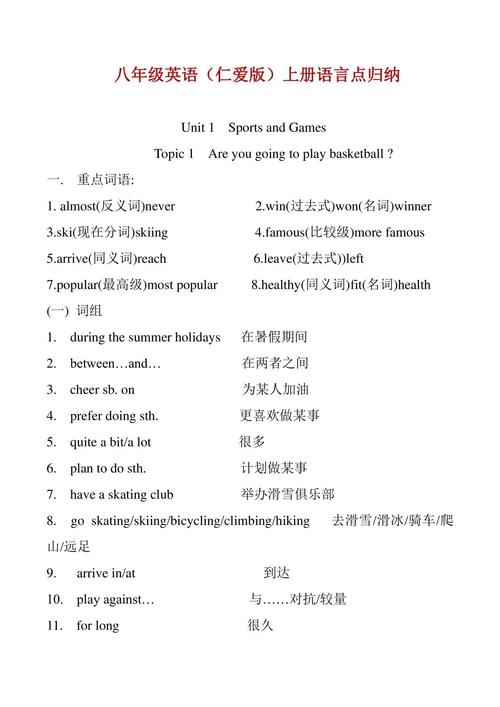
(图片来源网络,侵删)
- 动词:
join,win,hope,cheer,practice,prepare for,come on - 名词:
game,match,team,player,score,result,news,training,goal - 形容词:
favorite,exciting,wonderful,popular,outgoing,energetic - 副词:
together,hard,well - 短语:
play basketball,join the school team,cheer for,be ready for,both...and...,not only...but also...
核心句型
- 询问意愿与计划:
- — What do you want to do? / What would you like to do?
- — I want to join the school basketball team.
- — What are you going to do this weekend?
- — I'm going to practice with my team.
- 表达祝愿与鼓励:
- — Good luck! (祝你好运!)
- — Come on! (加油!)
- — Well done! (干得好!)
- 表达希望:
- — I hope you can win. (我希望你能赢。)
- — We hope to play against them soon. (我们希望很快能和他们比赛。)
- 描述比赛结果:
- — What's the result? (结果怎么样?)
- — Our team won the game. (我们队赢了比赛。)
语法重点
- 一般将来时
- 结构:
will + 动词原形或be going to + 动词原形 - 用法:
will: 表示临时决定、预测或意愿。- I'll help you with your homework. (我临时决定帮你。)
be going to: 表示事先计划好的事情或根据现有迹象做出的预测。- She is going to play tennis tomorrow. (她计划好明天打网球。)
- Look at the dark clouds. It's going to rain. (看乌云,要下雨了。)
- 结构:
- 情态动词
can的用法- 能力: I can swim.
- 许可: Can I borrow your pen?
- 请求: Can you help me?
- 可能性: Anybody can make mistakes.
功能意念项目
- 谈论运动: Talking about sports
- 表达意愿与计划: Expressing intentions and plans
- 表达祝愿与鼓励: Expressing good wishes and encouragement
Unit 2 Keeping Healthy
核心词汇
(图片来源网络,侵删)
- 动词:
have,get,catch,feel,rest,exercise,drink,eat,sleep,hurt - 名词:
health,cold,fever,headache,toothache,stomachache,medicine,habits,fruit,vegetable,water - 形容词:
healthy,unhealthy,ill,sick,tired,important - 短语:
have a cold,have a fever,have a headache,see a doctor,take some medicine,do more exercise,eat a balanced diet,go to bed early
核心句型
- 询问健康状况:
- — What's the matter (with you)? / What's wrong (with you)? / What's your trouble?
- — I have a cold / a fever / a headache.
- 给出建议:
- — You should see a doctor. / You should drink more hot water.
- — You'd better stay in bed. (你最好卧床休息。)
- — Why not see a doctor? (为什么不看看医生呢?)
- — What about taking some medicine? (吃药怎么样?)
- 描述生活习惯:
- — Eating more vegetables is good for your health.
- — Drinking enough water is important.
- — I exercise every day to keep healthy.
语法重点
- 情态动词
should的用法- 结构:
should + 动词原形 - 用法: 表示“应该”,用于提出建议或劝告。
- You should brush your teeth twice a day.
- He shouldn't stay up late.
- 结构:
Why don't you...?句型- 用法: 提出建议,意为“你为什么不……呢?”相当于
You should...。- Why don't you go to see a doctor? = You should go to see a doctor.
- 用法: 提出建议,意为“你为什么不……呢?”相当于
How和What引导的感叹句- 结构:
How + 形容词/副词 + 主语 + 谓语!- How beautiful the girl is!
What + (a/an) + 形容词 + 名词 + 主语 + 谓语!- What a beautiful girl she is!
- What delicious food it is!
- 结构:
功能意念项目
- 谈论健康问题: Talking about health problems
- 提出建议: Giving advice
Unit 3 Our Hobbies
核心词汇
- 动词:
collect,read,draw,sing,dance,skate,swim,enjoy,share,appreciate - 名词:
hobby,collection,stamp,coin,book,magazine,song,painting,interest - 形容词:
interesting,boring,relaxing,lovely,wonderful,popular - 短语:
collect stamps,read books,listen to music,go swimming,enjoy doing sth.,share...with...,at the same time
核心句型
- 询问爱好:
- — What's your hobby? / What do you like doing in your free time?
- — My hobby is collecting stamps. / I like collecting stamps.
- 表达喜欢程度:
- — How do you like it? / What do you think of it?
- — I like it very much. / It's interesting. / I love it.
- 描述爱好带来的感受:
- — It makes me happy/relaxed.
- — I enjoy reading because it's fun.
语法重点
like的用法like to do sth.: 偶尔或具体地做某事。- I like to swim in summer.
like doing sth.: 习惯性或长期地做某事,表示一种兴趣或爱好。- I like swimming.
enjoy的用法- 结构:
enjoy doing sth.(享受做某事)- She enjoys listening to pop music.
- 结构:
make的用法make + 宾语 + 形容词: 使某人/某物……- The good news made us happy.
- It's a lovely day. It makes me feel good.
功能意念项目
- 谈论爱好: Talking about hobbies
- 表达喜好: Expressing preferences
Unit 4 Our World
核心词汇
- 动词:
happen,start,stop,blow,fall,rise,protect,pollute,build,move - 名词:
weather,wind,rain,snow,sun,cloud,temperature,season,pollution,environment,animal,plant - 形容词:
sunny,cloudy,windy,rainy,snowy,hot,cold,warm,cool,terrible,beautiful,important - 短语:
what's the weather like?,It's a sunny day.,It's getting cold.,in spring,protect the environment,cut down trees
核心句型
- 询问天气:
- — What's the weather like (in Beijing)? / How's the weather (in Beijing)?
- — It's sunny/cloudy/windy/rainy.
- 描述天气变化:
- — It's getting warmer and warmer. (天气变得越来越暖和。)
- — The wind is blowing strongly. (风刮得很大。)
- 谈论环境问题:
- — We should protect the environment.
- — Pollution is a big problem.
- — Many animals are in danger.
语法重点
It的用法- 作形式主语: 代替动词不定式或动名词短语。
- It's important to learn English well. (真正主语是
to learn English well) - It's no use crying over spilt milk. (覆水难收,真正主语是
crying over spilt milk)
- It's important to learn English well. (真正主语是
- 作形式宾语: 代替宾语从句。
- I find it interesting to talk with him. (真正宾语是
to talk with him)
- I find it interesting to talk with him. (真正宾语是
- 指代天气: It's raining.
- 指代时间: It's 8 o'clock.
- 指代距离: It's 5 kilometers from my home to school.
- 作形式主语: 代替动词不定式或动名词短语。
功能意念项目
- 谈论天气: Talking about the weather
- 谈论环境: Talking about the environment
八年级下册
Unit 5 Feeling Happy
核心词汇
- 动词:
feel,smile,laugh,cry,share,complain,miss,surprise,invite,celebrate - 名词:
feeling,smile,laugh,friendship,birthday,party,gift,surprise,reason,secret - 形容词:
happy,sad,angry,excited,surprised,lonely,worried,proud,beautiful - 短语:
feel happy,share...with...,complain about,miss sb.,make sb. happy,at the party,be proud of
核心句型
- 询问感受:
- — How do you feel? / How are you feeling?
- — I feel happy/sad/excited.
- 表达原因:
- — What makes you so happy?
- — Because I got a gift from my best friend.
- — The good news made us excited.
- 表达惊讶:
- — What a surprise! / What a surprise party!
- — I'm surprised to see you here.
语法重点
- 系表结构
- 结构:
系动词 + 表语 (形容词/名词) - 常见系动词:
be,look,sound,smell,taste,feel,become,get,turn,seem- The soup tastes delicious. (尝起来)
- He looks tired. (看起来)
- The leaves turn yellow in autumn. (变得)
- 结构:
make的用法深化make + 宾语 + 形容词: 使……处于某种状态。- The story made me sad.
make + 宾语 + 动词原形: 使/让某人做某事 (注意:此处用原形,不是to do或doing)。- The teacher made us stand up.
- His words made me think.
功能意念项目
- 谈论感受: Talking about feelings
- 表达原因: Expressing reasons
Unit 6 Stay Safe
核心词汇
- 动词:
happen,cross,walk,ride,swim,climb,fall,hurt,shout,call,remember - 名词:
safety,accident,traffic,rule,light,road,water,fire,phone,number - 形容词:
safe,dangerous,busy,important,necessary - 短语:
traffic rules,traffic lights,look left and right,play on the road,swim in the river,climb the tree,call for help,remember to do sth.
核心句型
- 提出警告与建议:
- — Be careful! / Don't play on the road!
- — You must/mustn't cross the street when the light is red.
- — It's dangerous to swim in the river.
- 描述事故:
- — What happened? (发生什么事了?)
- — A car hit a bike.
- 寻求与提供帮助:
- — Can you help me? / I need help.
- — Of course. What can I do for you?
语法重点
- 情态动词
must与have to的区别must: 表示主观“必须”,强调个人意志,否定式mustn't表示“禁止”。- You must finish your homework. (你主观上必须完成作业。)
- You mustn't smoke here. (禁止在此吸烟。)
have to: 表示客观“必须”,强调外界要求,其否定式don't/doesn't have to表示“不必”。- I have to get up early tomorrow. (我明天必须早起,因为有事。)
- You don't have to do it right now. (你不必现在就做。)
remember的用法remember to do sth.: 记得去做某事 (事情还没做)。- Remember to turn off the light. (记得去关灯。)
remember doing sth.: 记得做过某事 (事情已经做了)。- I remember seeing him somewhere. (我记得见过他。)
功能意念项目
- 谈论安全: Talking about safety
- 提出警告与建议: Giving warnings and advice
Unit 7 Enjoying Fashion
核心词汇
- 动词:
wear,put on,dress,match,choose,buy,look,show - 名词:
fashion,clothes,shirt,T-shirt,skirt,jeans,shoes,hat,color,style,price,size - 形容词:
fashionable,beautiful,nice,cool,expensive,cheap,comfortable,long,short - 短语:
put on,dress up,look good in,match...with...,try on,in style,on sale
核心句型
- 描述穿着:
- — What are you wearing? / What do you look like?
- — I'm wearing a blue T-shirt and jeans.
- — She looks beautiful in that red dress.
- 评价衣物:
- — How do you like this shirt? / What do you think of this shirt?
- — It's nice, but it's too expensive for me.
- — The color matches your shoes.
- 购物场景:
- — Can I try it on? (我能试穿一下吗?)
- — What size do you wear? / What's your size?
- — I'll take it. / I'll buy it.
语法重点
wear,put on,dress的区别wear: 穿着,状态,后接衣物、饰品等。- She wears glasses.
put on: 穿上,动作,强调“穿”这个动作。- Put on your coat. It's cold outside.
dress: 给……穿衣服,或自己穿衣服,作不及物动词时,常与反身代词连用dress oneself。- The mother is dressing her baby.
- He dressed quickly and left.
look的用法look + 形容词: 看起来……- You look tired today.
look like + 名词: 看起来像……- He looks like his father.
功能意念项目
- 谈论时尚: Talking about fashion
- 购物场景: Shopping
Unit 2 Traveling
(注:下册通常有8个单元,此处选取第2单元作为代表,其他单元主题可能如 Festivals, Movies, Music 等,知识点结构类似。)
核心词汇
- 动词:
travel,visit,go,take,drive,fly,stay,enjoy,like,prefer - 名词:
trip,journey,vacation,holiday,place,city,country,beach,mountain,museum,hotel,ticket - 形容词:
wonderful,interesting,beautiful,boring,relaxing,exciting,famous - 短语:
go on a trip,travel to...,visit a museum,take a train/plane,stay at a hotel,have a good time
核心句型
- 谈论旅行计划:
- — Where did you go on vacation? / Where are you going for your vacation?
- — I went to Beijing. / I'm going to Hainan.
- — How was your trip? / How is your trip?
- — It was wonderful. / It's exciting.
- 描述旅行经历:
- — What did you do there?
- — I visited the Great Wall and took many photos.
- — I enjoyed the food there.
语法重点
- 一般过去时 vs. 现在进行时
- 一般过去时: 描述过去发生的、已完成的动作。
- I visited the museum yesterday.
- 现在进行时: 描述当前正在发生的动作或现阶段正在进行的动作。
- I am visiting the museum now.
- I am visiting Beijing this week. (这周我正在北京旅行)
- 一般过去时: 描述过去发生的、已完成的动作。
- 一般过去时的不规则动词
- 需要重点记忆常见的不规则动词过去式,如:
go-went,see-saw,eat-ate,take-took,visit-visited,stay-stayed等。
- 需要重点记忆常见的不规则动词过去式,如:
功能意念项目
- 谈论旅行: Talking about travel
- 分享经历: Sharing experiences
总结与建议
- 词汇为王: 坚持每天背单词,结合课文和例句记忆,不要孤立地背单词表。
- 语法为纲: 每个单元的语法是核心,务必理解其结构和用法,并通过造句来巩固。
- 听说领先: 多听课文录音,模仿语音语调,尝试用所学句型和同学进行对话练习。
- 读写跟上: 坚持做阅读理解,培养语感,多写句子和小短文,运用所学知识。
- 整理错题: 准备一个错题本,记录做错的题目,特别是语法题,定期复习,避免再犯。
希望这份知识点总结对您有帮助!祝您学习进步!