
生活安排英语作文如何高效展开写作?
作文示例 2026年1月26日 18:04:13 99ANYc3cd6
Part 1: 基础版
这个版本适合初中生或英语初学者,结构清晰,用词简单。 My Daily Life**
A good daily life plan is very important for students. It helps us study better and stay healthy. Here is my daily routine.
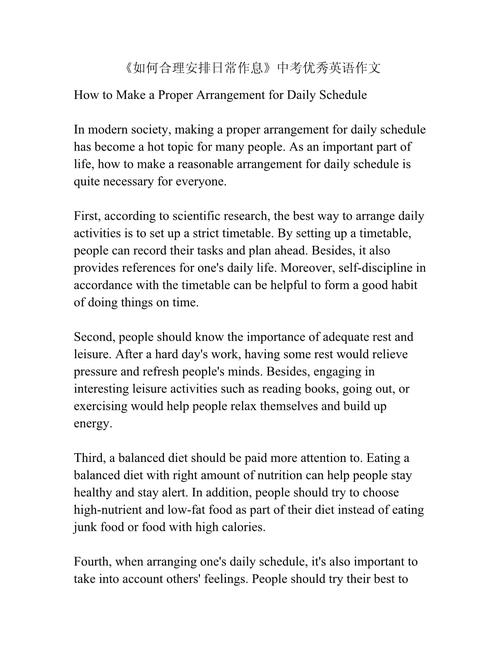
I usually get up at 6:30 in the morning. After brushing my teeth and washing my face, I do some morning exercises for about 15 minutes. Then I have my breakfast and go to school by bus.
In the morning, I have four classes. My favorite subject is English. I always listen to the teacher carefully and take notes. During the break, I often talk with my friends or read a book.
In the afternoon, I have three more classes. After school, I usually play basketball with my classmates for half an hour. It’s a good way to relax. Then I go home and start my homework. I finish it before 7:00 p.m.
In the evening, I have dinner with my family. After that, I sometimes watch TV for a little while, but most of the time, I read books or prepare for the next day's lessons. I go to bed at 10:00 p.m. to get enough sleep.
I think my daily life is busy but meaningful. A good plan helps me make the best use of my time.
Part 2: 进阶版
这个版本适合高中生或大学生,内容更丰富,使用了更高级的词汇和复杂的句式,逻辑层次更深。 The Art of Balancing: My Blueprint for a Fulfilling Life**
In the relentless pace of modern life, a well-structured daily schedule is not merely a tool for productivity; it is the very foundation for a balanced and fulfilling existence. My life is a carefully choreographed symphony of academic pursuits, personal well-being, and meaningful social connections, all governed by a blueprint I have meticulously designed.
My day begins at the crack of dawn, around 6:00 AM. This sacred hour is reserved for mindfulness and physical rejuvenation. I engage in a 20-minute meditation session to center my thoughts, followed by a brisk jog or a session of yoga. This morning ritual not only energizes my body but also clears my mind, preparing me to tackle the day's challenges with focus and clarity.
The core of my day is dedicated to academic rigor. From 8:00 AM to 4:00 PM, I am fully immersed in my studies at university. I approach my classes with an active mindset, not just as a passive recipient of information. During lectures, I take concise yet comprehensive notes, and in the afternoon, I dedicate at least two hours to the library for in-depth research and consolidation. This disciplined approach ensures that I not only keep up with the curriculum but also cultivate a genuine passion for my field.
However, I firmly believe that all work and no play makes Jack a dull boy. Therefore, I have intentionally carved out time for extracurricular activities and social life. Three times a week, I participate in the university debate club, which hones my critical thinking and public speaking skills. Weekends are my time to unwind and reconnect. I might explore a new hiking trail, catch up with old friends over coffee, or simply indulge in a good novel. These moments are crucial for recharging my batteries and maintaining my mental health.
In the evening, as the world winds down, my schedule shifts towards self-improvement and relaxation. I spend an hour learning a new language using an app, a small step towards my long-term goal of becoming bilingual. Before bed, I disconnect from all digital devices to read a book, allowing my imagination to wander freely. I ensure I am in bed by 11:00 PM, as I recognize that sufficient sleep is non-negotiable for optimal cognitive function.
In conclusion, my life plan is a dynamic equilibrium between ambition and well-being. It is a testament to the fact that with effective time management, one can excel academically, nurture personal passions, and build strong relationships. This blueprint is not a rigid set of rules, but a flexible guide that empowers me to live a life of purpose, productivity, and joy.
Part 3: 核心词汇与句型
核心词汇
名词:
- Routine - n. 例行公事,常规
- Schedule - n. 时间表,计划
- Balance - n. 平衡
- Productivity - n. 生产力,效率
- Discipline - n. 纪律,自律
- Well-being - n. 幸福,安康
- Equilibrium - n. 平衡,均衡
- Blueprint - n. 蓝图,计划
- Foundation - n. 基础
动词:
- Structure - v. 构造,组织
- Balance - v. 平衡
- Allocate - v. 分配,分派
- Prioritize - v. 优先处理
- Choreograph - v. 精心设计 (比喻用法)
- Immerse - v. 使沉浸
- Carve out - v. 腾出 (时间)
- Recharge - v. 充电,恢复精力
- Disconnect - v. 断开连接,脱离
形容词/副词:
- Well-structured - adj. 结构良好的
- Meticulous - adj. 一丝不苟的,精细的
- Relentless - adj. 无情的,不间断的
- Meaningful - adj. 有意义的
- Sacred - adj. 神圣的 (此处指不可侵犯的)
- Rigorous - adj. 严格的,严密的
- Intentional - adj. 故意的,有意的
- Dynamic - adj. 动态的,充满活力的
- Flexible - adj. 灵活的
高分句型
-
开篇/引入主题:
A well-structured daily schedule is not merely a tool for productivity; it is the very foundation for a balanced and fulfilling existence.(一个结构良好的日程安排不仅仅是提高效率的工具,它更是平衡和充实生活的基础。)In the fast-paced world we live in, effective time management has become an indispensable skill for success.(在我们生活的快节奏世界里,有效的时间管理已成为成功不可或缺的技能。)
-
描述习惯/做法:
My day begins at the crack of dawn...(我的天一亮就开始了…… - 比 "I get up early" 更生动)This sacred hour is reserved for...(这个神圣的时间是留给……的 - 强调其重要性)I have intentionally carved out time for...(我特意为……腾出了时间)I firmly believe that...(我坚信……)
-
表达观点/
In conclusion, my life plan is a dynamic equilibrium between ambition and well-being.(我的生活计划是在雄心和健康之间的动态平衡。)This blueprint is not a rigid set of rules, but a flexible guide that empowers me to live a life of purpose, productivity, and joy.(这个蓝图不是一套僵化的规则,而是一个灵活的指南,它让我能够过上一种有目的、高效且快乐的生活。)It is a testament to the fact that...(这证明了……的事实)
Part 4: 写作思路与技巧
-
审题与构思:
- 确定主题: "生活安排"可以很宽泛,你需要聚焦,是写日常,还是长期计划?是强调学习与工作的平衡,还是健康与娱乐的平衡?
- 确定读者: 是写给老师、同学,还是用于某个考试?这决定了语言的正式程度。
- 列出要点: 像头脑风暴一样,把你生活中最重要的几个方面列出来,学习、运动、爱好、社交、休息、家庭时间等。
-
搭建结构:
- 经典三段式:
- 提出观点,说明为什么生活安排很重要。
- 主体: 分点详细描述你的安排,可以用 "Firstly/Secondly/Finally" 或 "In the morning/In the afternoon/In the evening" 来组织。
- 总结你的观点,重申良好生活安排带来的好处。
- 进阶结构: 可以采用“总-分-总”的结构,但在主体部分使用更高级的逻辑连接词,如
Furthermore,Moreover,On the other hand,However等,使文章逻辑更严密。
- 经典三段式:
-
- 具体化: 不要只说 "I study hard." 要说 "I dedicate at least two hours to the library for in-depth research and consolidation." (具体的时间、地点、活动)
- 展示,而非告知: 不要只说 "I am healthy." 要描述你的健康习惯,如 "I engage in a 20-minute meditation session followed by a brisk jog." (通过行为来展示)
- 使用高级词汇和句型: 参考上面的核心词汇和句型,替换掉简单表达,让文章显得更专业、更有深度。
-
检查与润色:
- 语法和拼写: 检查时态、主谓一致、冠词等基本语法错误。
- 流畅度: 大声朗读你的文章,看看是否通顺,有没有拗口的地方。
- 用词: 确保用词准确且多样化,避免重复。
希望这些材料对你有帮助!你可以根据自己的实际情况,选择合适的版本进行参考和修改。