七年级下册英语语法表
校园之窗 2026年1月26日 11:32:24 99ANYc3cd6
七年级下册英语核心语法总表
| 语法模块 | 核心要点 | 关键词/句型 | 例句 |
|---|---|---|---|
| 情态动词 Can | 能力与许可 表示“能、会”,指具备做某事的能力,也用于请求或许可。 |
can + 动词原形Can you...?Yes, you can. / No, you can't. |
I can swim. (我会游泳。) Can you help me? (你能帮我吗?) —Can I borrow your pen? (我能借你的笔吗?) —Yes, you can. (可以。/ No, you can't. 不行。) |
| 可能性 表示某事“可能”发生,通常用于疑问句和否定句中。 |
can't + 动词原形 |
It can't be true. (这不可能是真的。) He can't be at home. He is at school. (他不可能在家,他在上学呢。) |
|
| 一般过去时 | 定义 表示过去某个时间点发生的动作或存在的状态。 |
动词的过去式 |
I went to the park yesterday. (我昨天去了公园。) She was happy last night. (她昨晚很开心。) |
| 动词过去式构成 ①规则变化: - 一般加 -ed (e.g., work-worked)- 以 e 加 -d (e.g., live-lived)- “辅音+y”变 y 为 i 再加 -ed (e.g., study-studied)- 重读闭音节结尾,双写辅音再加 -ed (e.g., stop-stopped)②不规则变化: 需要单独记忆,如: be-was/were, go-went, have-had, do-did, see-saw 等。 |
I played basketball with my friends. (我和朋友们打了篮球。) He watched TV last Saturday. (他上周六看了电视。) She studied for the test. (她为考试而学习。) |
||
| 时间状语 通常与表示过去的时间状语连用。 |
yesterday, last night/week/month/year, ...ago, in + 过去的年份, the day before yesterday |
He left two days ago. (他两天前离开了。) They visited the museum last month. (他们上个月参观了博物馆。) |
|
| There be 句型 | 肯定句 表示“某地有某物”,be 动词的形式要与后面名词的单复数保持一致。 |
There is/are + 名词 + 地点状语 |
There is a book on the desk. (桌子上有一本书。) There are some birds in the tree. (树上有一些鸟。) |
| 否定句 在 is/are 后面加 not。 |
There isn't/aren't + 名词 + 地点状语 |
There isn't a cat in the room. (房间里没有猫。) There aren't any apples in the bag. (包里没有苹果。) |
|
| 一般疑问句 把 is/are 提到句首,句号变问号,回答时用 Yes, there is/are. 或 No, there isn't/aren't. |
Is/Are there + 名词 + 地点状语? |
—Is there a bank near here? (这附近有银行吗?) —Yes, there is. / No, there isn't. —Are there any students in the classroom? (教室里有学生吗?) —Yes, there are. / No, there aren't. |
|
| 特殊疑问句 对数量提问用 How many,对事物提问用 What。 |
How many + 复数名词 + are there...?What's + 地点状语? |
How many students are there in your class? (你们班有多少个学生?) What's in your schoolbag? (你书包里有什么?) |
|
| 方位介词 | 表示位置关系,通常与 be 动词连用。 |
in (在...里面)on (在...上面)under (在...下面)behind (在...后面)next to / beside (紧挨着)between...and... (在...和...之间)near (在...附近) |
The ball is in the box. (球在盒子里。) The cat is under the table. (猫在桌子下面。) The library is next to the post office. (图书馆紧挨着邮局。) |
| 祈使句 | 定义 用来表达命令、请求、建议、警告等,主语 You 通常省略。 |
① 肯定形式:动词原形 + 其他② 否定形式: Don't + 动词原形 + 其他 |
Open the door, please. (请开门。) Be quiet! (安静!) Don't be late. (不要迟到。) Don't talk in class. (上课不要说话。) |
| 特殊疑问句 | 结构 由“特殊疑问词 + 一般疑问句”构成。 |
What (什么) Where (哪里) When (什么时候) Who (谁) Why (为什么) How (怎么样) |
What is your name? (你叫什么名字?) Where did you go? (你去哪里了?) When did you finish your homework? (你什么时候完成作业的?) Who did you meet? (你遇见谁了?) Why are you sad? (你为什么难过?) How was your weekend? (你周末过得怎么样?) |
| 反身代词 | 定义与用法 表示“自己、自身”,通常作宾语或同位语。 |
myself (我自己)yourself (你自己)himself (他自己)herself (她自己)<britself (它自己)ourselves (我们自己)yourselves (你们自己)themselves (他们/她们/它们自己) |
I taught myself to play the piano. (我自学了弹钢琴。) Please take care of yourself. (请照顾好你自己。) The cat is cleaning itself. (猫在给自己清理。) |
语法学习小贴士
- 理解为主,记忆为辅:不要死记硬背规则,先理解每个语法的核心意思和使用场景,再通过例句去感受,最后才是记忆关键词和句型。
- 在语境中学:把语法点放到句子、短文甚至对话中去学习,这样不仅能学会用法,还能学会语感。
- 多做练习,及时巩固:语法知识需要通过大量的练习来内化,可以做一些单项选择、句型转换、完形填空等题型。
- 整理错题本:把自己做错的题目抄下来,写下正确答案和错误原因,考前翻一翻错题本,效果非常好。
- 大声朗读:每天朗读课文或优秀的范文,可以帮助你熟悉句子的结构和语调,对语法的掌握大有裨益。
希望这份语法表能对你的英语学习有所帮助!加油!
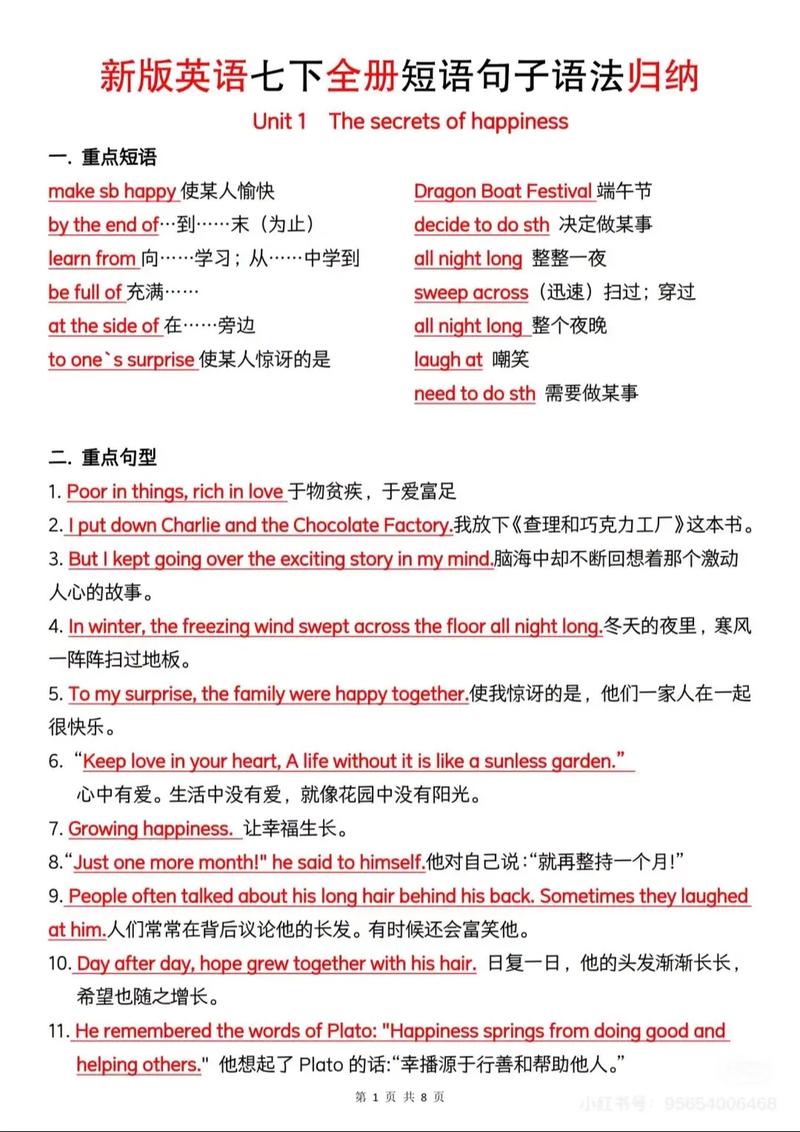
(图片来源网络,侵删)