8年级下册英语人教版重点难点有哪些?
校园之窗 2026年1月26日 06:31:22 99ANYc3cd6
整体概览
八年级下册是人教版英语承上启下的关键一册,它不仅继续巩固七年级所学的语法和词汇,更引入了许多新的、重要的语法点,是整个初中阶段英语学习的重点和难点。
教材主要模块:
(图片来源网络,侵删)
- Units 1-10: 每个单元围绕一个特定的话题展开,包含词汇、听力、口语、阅读、语法等部分。
- Review of Units 1-5: 对前五个单元的复习。
- Review of Units 6-10: 对后五个单元的复习。
核心知识点与语法重点
这是八年级下册的重中之重,务必牢固掌握。
重点句型
What's the matter? / What's wrong with...?- 用法: 询问某人或某物出了什么问题。
- 答语:
I have a headache/stomachache./He hurt his leg./There is something wrong with my bike.
Why don't you...? / Why not...?- 用法: 提出建议,意为“你为什么不……呢?”
- 例句:
Why don't you go to see a doctor?/Why not talk to your parents?
Should (do) / Shouldn't (do)- 用法: 提出建议或劝告,意为“应该(不应该)”。
- 例句:
You should lie down and rest./You shouldn't eat so much candy.
Could you please...? / Could I...?- 用法: 用于礼貌地请求或许可。
- 例句:
Could you please pass me the salt?(请求) /Could I borrow your book?(许可)
I used to be afraid of the dark.- 用法: 描述过去的状态或习惯,但现在改变了。
used to do sth.。
- 用法: 描述过去的状态或习惯,但现在改变了。
I'm looking for a job as a waiter.- 用法:
look for强调“寻找”的过程,find强调“找到”的结果。
- 用法:
What's the best movie theater?- 用法: 询问三者或三者以上的“最……”,用于形容词和副词的最高级。
It's too noisy.- 用法:
too意为“太”,常表示负面含义,后接形容词或副词原级。
- 用法:
I'm not sure if I can come.- 用法:
if引导宾语从句,意为“是否”。
- 用法:
核心语法
-
情态动词
should的用法: 提出建议、义务或可能性。You should finish your homework first.(建议)
could的用法: 比can更委婉地提出请求或许可。Could you help me?(比Can you help me?更礼貌)
mustvs.have to:must表示主观认为“必须”,否定式是mustn't(禁止)。have to表示客观情况要求“必须”,否定式是don't/doesn't have to(不必)。
-
过去进行时
- 结构:
was/were + doing - 用法: 表示过去某个时间点或时间段正在进行的动作。
- 标志词:
at this time yesterday,at 8 o'clock last night,while(当……的时候) - 例句:
I was doing my homework at 9 p.m. yesterday.
- 结构:
-
现在完成时
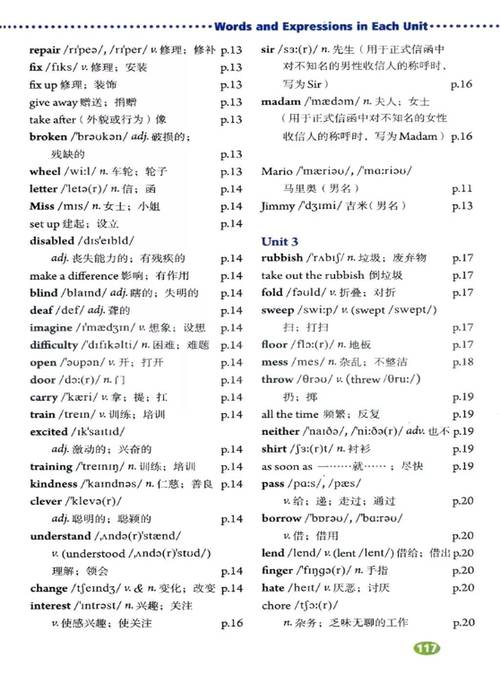 (图片来源网络,侵删)
- 结构:
have/has + done(过去分词) - 用法: 这是八年级下册最难也是最重要的语法点之一。
- 表示过去发生并持续到现在的动作或状态:
I have lived here for ten years. - 表示过去发生的动作对现在造成的影响或结果:
He has broken his leg, so he can't walk now.
- 表示过去发生并持续到现在的动作或状态:
- 标志性时间状语:
- for + 一段时间:
for two hours - since + 过去的时间点:
since 2025,since last week - already, yet, just, ever, never 等词。
- for + 一段时间:
- 易混点: 与一般过去时的区别,一般过去时强调动作发生在过去,并有明确的过去时间;现在完成时强调动作对现在的影响或持续到现在。
- 结构:
-
反身代词
- 构成:
myself,yourself,himself,herself,itself,ourselves,yourselves,themselves - 用法: 表示“……自己”。
- 作宾语:
He taught himself English.(他自学了英语。) - 作同位语,加强语气:
I will do it myself.(我会自己做的。)
- 作宾语:
- 构成:
-
不定代词
- 重点:
someone,anyone,no one,everyone - 区别:
someone和someone通常用于肯定句。anyone用于疑问句和否定句。no one表示“没有人”,等同于nobody,只用于否定句,其谓语动词用单数。everyone表示“每个人”,只用于肯定句,其谓语动词用单数。
- 重点:
-
形容词和副词的最高级
- 规则变化: 在词尾加
-est(e.g.,tall -> tallest),或双写辅音字母再加-est(e.g.,big -> biggest),或变y为i再加-est(e.g.,happy -> happiest)。 - 不规则变化:
good/well -> best,bad/badly -> worst,many/much -> most,little -> least - 句型:
主语 + 谓语 + the + 最高级 + (in/of...)Tom is the tallest (of the three boys).This is the best movie (I have ever seen).
- 规则变化: 在词尾加
各单元话题与词汇
| 单元 | 主要话题 | 核心词汇 |
|---|---|---|
| Unit 1 | What's the matter? | 身体部位: head, tooth, neck, stomach, throat, fever, rest, health, advice, dentist |
| Unit 2 | I'll help to clean up the city parks. | 志愿活动: volunteer, sign, sick, cheer, lonely, several, strong, feeling, satisfaction, joy |
| Unit 3 | Could you please clean your room? | 家务劳动与请求: rubbish, take out the trash, fold the clothes, sweep the floor, mess, borrow, invite, stress, waste, fair |
| Unit 4 | Why don't you talk to your parents? | 人际关系与烦恼: instead, instead of, communicate, argue, proper, nervous, perhaps, unless, nervous, pressure, compete |
| Unit 5 | What were you doing when the rainstorm came? | 过去进行时 & 历史事件: rainstorm, alarm, begin, heavily, suddenly, suddenly, pick up, strange, beat, against, die down, reporter |
| Unit 6 | An old man tried to move the mountains. | 中国神话故事: shoot, stone, god, remind, bit, a little bit, silly, turn into, excite, breathe, hide, tail |
| Unit 7 | What's the highest mountain in the world? | 世界地理与自然: square, meter, deep, desert, population, tour, wall, fact, achieve, challenge |
| Unit 8 | Have you read Treasure Island yet? | 文学作品与经历: treasure, island, classic, page, hurry, due, ship, finish, wait, abroad |
| Unit 9 | Have you ever been to a museum? | 旅游经历: museum, boat, trip, end, invent, learn, especially, dislike, advantage, disadvantage |
| Unit 10 | I've had this bike for three years. | 拥有物与情感: yard, sale, sweet, memory, soft, toy, bear, maker, produce, brand |
学习建议
-
词汇是基础,天天要记牢:
 (图片来源网络,侵删)
- 不要死记硬背,结合课文和例句记忆。
- 利用词根词缀、联想等方法,提高记忆效率。
- 每天坚持听写和默写,做到“四会”(听、说、读、写)。
-
语法是骨架,理解加练习:
- 特别是现在完成时,一定要搞清楚它和一般过去时的区别,多做对比练习。
- 对于情态动词、反身代词等,要理解其基本含义,并通过造句来巩固。
- 准备一个错题本,记录常错的语法点,定期复习。
-
听说读写,全面发展:
- 听: 坚持听课本录音,可以尝试听一些简单的英文动画片或歌曲。
- 说: 大胆开口,跟着录音模仿语音语调,可以和家人、同学进行简单的英语对话。
- 读: 精读课本文章,理解每句话的意思,可以适当阅读一些英文分级读物。
- 写: 从仿写句子开始,逐步过渡到写小短文、日记,注意时态、单复数和标点符号。
-
利用好课本和配套资源:
- 课本是最好的学习材料,吃透每一篇课文。
- 积极使用练习册、同步听力等配套资源,巩固所学知识。
- 关注教材中的文化板块,了解中西方文化差异。
希望这份详细的指南能对你的英语学习有所帮助!祝你学习进步!