九年级英语2单元单词有哪些?
校园之窗 2026年1月26日 04:22:07 99ANYc3cd6
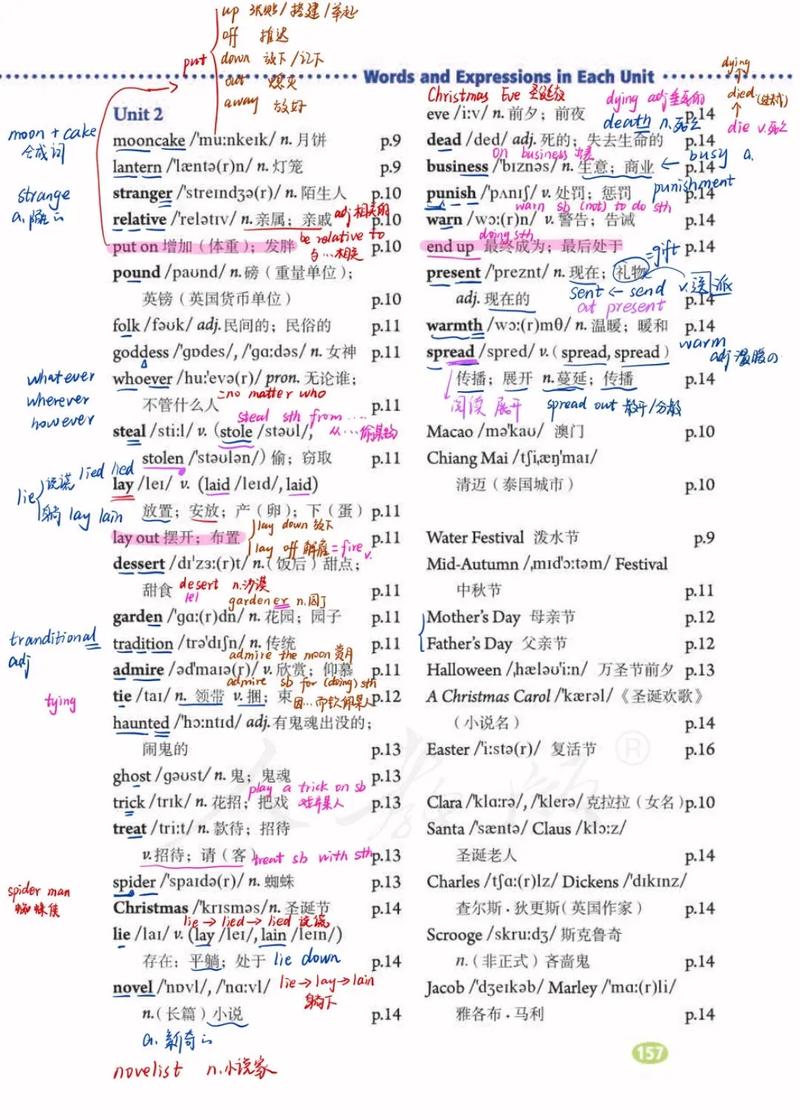
九年级英语第二单元核心词汇总汇 (Health & Seeing a Doctor)
本单元的核心主题围绕健康、疾病、就医和保持健康的生活方式展开。
第一部分:核心单词
我将单词分为几类,方便你联想记忆。
身体部位与不适
- stomach /'stʌmək/ n. 胃;腹部
- 搭配: have a stomachache 胃痛,肚子疼
- throat /θrəʊt/ n. 喉咙
- 搭配: have a sore throat 喉咙痛
- tooth /tu:θ/ n. 牙齿 (pl. teeth /ti:θ/)
- 搭配: have a toothache 牙痛
- head /hed/ n. 头
- 搭配: have a headache 头痛
- fever /'fi:və(r)/ n. 发烧,发热
- 搭配: have a fever 发烧
- cough /kɒf/ n. & v. 咳嗽
- cold /kəʊld/ n. 感冒;a. 寒冷的
- 搭配: have a cold 感冒
- injure /'ɪndʒə(r)/ v. 受伤,损害
- injury /'ɪndʒəri/ n. 受伤处;伤害
- pain /peɪn/ n. 疼,疼痛
- hurt /hɜ:t/ v. 疼痛;受伤
疾病与症状
- illness /'ɪlnəs/ n. 疾病, illness
- disease /dɪ'zi:z/ n. 疾病,病 (通常指较严重的疾病)
- symptom /'sɪmptəm/ n. 症状
- allergy /'ælədʒi/ n. 过敏;过敏症
- virus /'vaɪrəs/ n. 病毒
- bacteria /bæk'tɪəriə/ n. 细菌 (pl.)
- infection /ɪn'fekʃn/ n. 传染;感染
医疗与建议
- medicine /'medsn/ n. 药;内服药
- pill /pɪl/ n. 药丸
- injection /ɪn'dʒekʃn/ n. 注射
- prescribe /prɪ'skraɪb/ v. 开(药方);嘱咐
- treatment /'tri:tmənt/ n. 治疗,疗法
- advice /əd'vaɪs/ n. 建议,忠告 (不可数名词)
- 搭配: give advice on... 在...方面提建议
- suggestion /sə'dʒestʃn/ n. 建议,意见 (可数名词)
- operation /ˌɒpə'reɪʃn/ n. 手术,操作
- recover /rɪ'kʌvə(r)/ v. 恢复,痊愈
- patient /'peɪʃnt/ n. 病人
描述感觉与状态的形容词
- uncomfortable /ʌn'kʌmfətəbl/ a. 不舒服的
- terrible /'terəbl/ a. 可怕的;糟糕的
- serious /'sɪəriəs/ a. 严重的
- slight /slaɪt/ a. 轻微的;略微的
- weak /wi:k/ a. 虚弱的;无力的
- energetic /ˌenə'dʒetɪk/ a. 精力充沛的
- stressed /strest/ a. 紧张的,有压力的
- exhausted /ɪg'zɔ:stɪd/ a. 筋疲力尽的
- awful /'ɔ:fl/ a. 极坏的;令人不快的
保持健康的动词与名词
- exercise /'eksəsaɪz/ n. & v. 锻炼,运动
- diet /'daɪət/ n. 饮食;节食
- balance /'bæləns/ n. 平衡;均衡
- habit /'hæbɪt/ n. 习惯
- lifestyle /'laɪfstaɪl/ n. 生活方式
- avoid /ə'vɔɪd/ v. 避免,躲开
- build up 增强;建立
- stay healthy 保持健康
第二部分:核心短语与句型
描述病情
- What's the matter (with you)? / What's wrong (with you)? 你怎么了?
- I have a headache/stomachache. 我头痛/肚子疼。
- I'm not feeling well. 我感觉不舒服。
- There's something wrong with my... 我的...有点问题。
- I have a fever/cold/cough. 我发烧了/感冒了/咳嗽。
- I feel terrible/awful. 我感觉糟透了。
给予建议
- You should/shouldn't... 你应该/不应该...
- 例: You should lie down and rest. (你应该躺下休息。)
- 例: You shouldn't eat too much candy. (你不应该吃太多糖果。)
- You'd better (not) do sth. 你最好(不)做某事。
- 例: You'd better see a doctor. (你最好去看医生。)
- Why not do sth.? / Why don't you do sth.? 为什么不...呢?
- 例: Why not drink some hot tea with honey? (为什么不喝点加蜂蜜的热茶呢?)
- It's a good idea to do sth. 做...是个好主意。
- I suggest (that) you (should) do sth. 我建议你...
- Take this medicine three times a day. 这个药一天吃三次。
- Drink plenty of water. 多喝水。
- Get enough sleep. 睡足觉。
医生与病人对话
- Open your mouth and say "Ah". 张开嘴,说“啊”。
- Let me check your temperature. 我来给你量个体温。
- It's nothing serious. 不严重。
- You need to take a rest for a few days. 你需要休息几天。
- You will get well soon. 你会很快好起来的。
关于健康生活方式
- It's important to do sth. 做...很重要。
- 例: It's important to eat a balanced diet. (均衡饮食很重要。)
- Doing sth. is good/bad for your health. 做...对你的健康有好处/坏处。
- 例: Exercising every day is good for your health. (每天锻炼对你的健康有好处。)
- Too much... is bad for you. 太多的...对你不好。
- You need to build up your strength. 你需要增强体质。
第三部分:重点语法点
情态动词 should 的用法
- 含义: 表示“应该”,用于提出建议或劝告。
- 结构:
主语 + should + 动词原形 - 否定形式:
主语 + shouldn't (should not) + 动词原形 - 例句:
- He should drink more water. (他应该多喝水。)
- You shouldn't watch too much TV. (你不应该看太多电视。)
should的被动语态:should + be + 动词过去分词- The old should be taken good care of. (老人应该被好好照顾。)
make 的用法
- 使役动词:
make + 宾语 + 动词原形(表示“让/使某人做某事”),注意此处动词用原形,不加to。- The doctor made me stay in bed. (医生让我待在床上。)
- 构成被动语态:
be made + to do sth.(在被动语态中,to要恢复。)- I was made to stay in bed. (我被要求待在床上。)
- be made of / from / in 的区别:
- be made of: 由...制成 (能看出原材料)
- This table is made of wood. (这张桌子是木头做的。)
- be made from: 由...制成 (看不出原材料)
- Wine is made from grapes. (葡萄酒是由葡萄酿成的。)
- be made in: 在...制造
- This car is made in Germany. (这辆车是在德国制造的。)
- be made of: 由...制成 (能看出原材料)
It's + adj. + for sb. + to do sth. 句型
- 含义: 某人做某事是...的。
- 结构:
It(形式主语) +is+形容词+for+某人(逻辑主语) +to do+某事(真正的主语) - 例句:
- It's important for us to learn English well. (学好英语很重要。)
- It's not easy for him to solve the problem. (解决这个问题不容易。)
第四部分:实用例句与对话
在学校,同学A看起来不舒服。
B: You look pale. What's the matter? (你看起来脸色苍白,怎么了?)
A: I have a terrible headache and a sore throat. (我头疼得厉害,喉咙也疼。)
B: You should go to the school nurse and have a rest. (你应该去校医室看看,然后休息一下。)
A: Good idea. I think I need to see a doctor too. (好主意,我想我也需要去看医生了。)
医生与病人对话
Doctor: What's wrong with you? (你哪里不舒服?)
Patient: I have a fever and I keep coughing. I feel awful. (我发烧了,还一直咳嗽,我感觉糟透了。)
Doctor: Let me check your temperature... It's a bit high. It's probably just a cold. You should stay in bed for two days and drink plenty of water. I'll prescribe some medicine for you. (我给你量个体温...有点高,可能只是感冒了,你应该卧床两天,多喝水,我给你开点药。)
Patient: Thank you, doctor. I hope I can recover soon. (谢谢医生,希望我能快点康复。)
学习建议:
- 分类记忆: 按照上面的分类来背单词,效果会更好。
- 语境学习: 不要孤立地背单词,把它们放到例句和对话中去理解和记忆。
- 造句练习: 尝试用核心单词和句型自己造句子,这是检验你是否掌握的最佳方式。
- 主题阅读: 找一些关于健康、运动、医疗的短文来阅读,巩固所学词汇。
希望这份总结对你有帮助!祝你学习进步!