七年级上册答案哪里找?
校园之窗 2026年1月25日 08:28:50 99ANYc3cd6
由于教材版本、地区和年份可能存在差异,一份“标准答案”并不存在,我可以为您提供一份非常详尽的知识点梳理、重点句型和常见题型解析,这比单纯的答案更有助于您学习和掌握知识,您可以根据这些内容来核对和完成您的作业。
人教版七年级上册英语核心知识点与重点句型总结
Unit 1 My name's Gina. (自我介绍与问候)
核心功能: 介绍自己、询问和回答姓名、电话号码。
重点句型:
-
问候与应答:
Hello! / Hi!(你好!)Good morning/afternoon/evening.(早上/下午/晚上好。)How are you?(你好吗?)I'm fine, thanks. And you?(我很好,谢谢,你呢?)I'm OK, thanks.(我很好,谢谢。)
-
介绍姓名:
My name's... / I'm...(我的名字是... / 我是...)What's your name?(你叫什么名字?)I'm... / My name's...(我叫...)Nice to meet you.(很高兴认识你。)Nice to meet you, too.(我也很高兴认识你。)
-
询问电话号码:
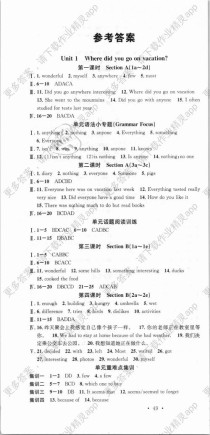
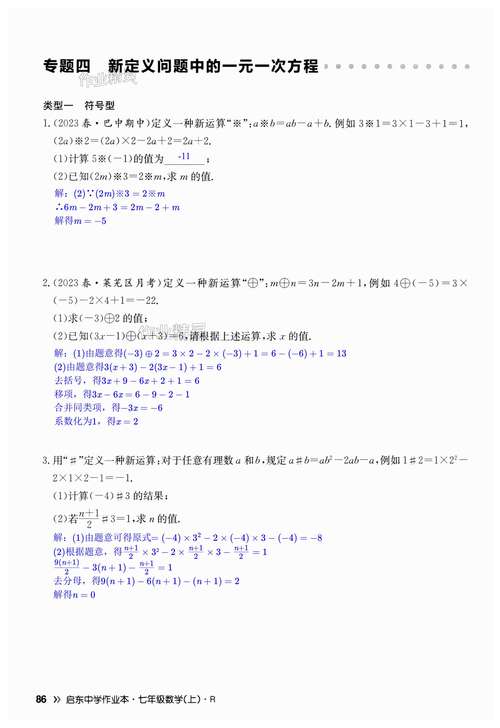 (图片来源网络,侵删)
What's your telephone number?(你的电话号码是多少?)It's... / My telephone number is...(它是... / 我的电话号码是...)
重点词汇:
- 名词: name, number, friend, China, Japan, first name, last name
- 形容词: fine, OK, good
- 代词: I, you, he, she, it, my, your, his, her
- 动词/短语: am, is, are, meet
常见题型与解析:
-
情景交际: 根据情景选择正确的应答。
A: Hi, I'm Tom. What's your name?B: ________- A. I'm fine. B. My name's Lily. C. Hello.
- 解析: B,A在询问对方的名字,所以B应该回答自己的名字。
-
单词拼写: 根据中文或首字母写单词。
-
- 电话号码 ____
-
- 名字 ____
- 解析: 1. telephone number 2. name
-
-
句型转换: 将肯定句变为一般疑问句并作否定回答。
- Her name is Mary. (变为一般疑问句)
- 解析: Is her name Mary? No, it isn't.
Unit 2 This is my sister. (谈论家庭)
核心功能: 介绍家人,识别家庭成员。
重点句型:
-
介绍他人:
This is... / These are...(这是... / 这些是...)That is... / Those are...(那是... / 那些是...)Is this/that...?(这是/那是...吗?)Yes, it is. / No, it isn't.(是的,它是。/ 不,它不是。)Are these/those...?(这些/那些是...吗?)Yes, they are. / No, they aren't.(是的,他们是。/ 不,他们不是。)
-
谈论家庭成员:
Who's he/she?(他/她是谁?)He's/She's my...(他是/我妈妈。)Who are they?(他们是谁?)They're my...(他们是我...)
重点词汇:
- 家庭成员: father (dad), mother (mom), parents, brother, sister, grandfather (grandpa), grandmother (grandma), family
- 指示代词: this, that, these, those
- 疑问代词: who
常见题型与解析:
-
单数与复数:
- This is his ____ (brother).
- These are his ____ (friend).
- 解析: 1. brother (单数) 2. friends (复数)
-
选择填空:
______ is your mother?She's my aunt.- A. What B. Who C. Where
- 解析: B,询问身份“是谁”用
Who。
-
看图写话: 根据家庭照片写句子。
- (一张有三口人的照片)
- 解析: This is my family. These are my parents. This is me. / This is my father. This is my mother. I have a happy family.
Unit 3 Is this your pencil? (谈论物品所属)
核心功能: 识别物品,询问和确认物品的所属关系。
重点句型:
-
询问物品所属:
Is this/that your...?(这是/那是你的...吗?)Yes, it is. / No, it isn't. It's his/hers.(是的,它是。/ 不,它不是,是他的/她的。)Are these/those your...?(这些/那些是你的...吗?)Yes, they are. / No, they aren't. They're their...(是的,他们是。/ 不,他们不是,是他们的...)
-
寻找失物:
What's this in English?(这个用英语怎么说?)It's a/an...(它是一个...)How do you spell it?(它怎么拼写?)P-E-N.(P-E-N.)
重点词汇:
- 学习用品: pencil, book, eraser, box, schoolbag, dictionary, notebook
- 代词: yours, mine, his, hers, ours, theirs
- 疑问词: what, how
常见题型与解析:
-
名词性物主代词:
- This is my book. = This book is ____.
- That is her ruler. = That ruler is ____.
- 解析: 1. mine 2. hers
-
连词成句:
- your, is, this, pencil (?)
- 解析: Is this your pencil?
-
拼写: 根据中文写出单词并拼写。
-
- 橡皮 ____ (e-r-a-s-e-r)
-
- 字典 ____ (d-i-c-t-i-o-n-a-r-y)
- 解析: 1. eraser 2. dictionary
-
Unit 4 Where's my schoolbag? (谈论物品位置)
核心功能: 询问和描述物品的位置。
重点句型:
- 询问位置:
Where's...?(Where is...?) (...在哪里?)It's in/on/under/near...(它在...里面/上面/下面/旁边...)Where are...?(Where are...?) (...在哪里?)They're in/on/under/near...(它们在...里面/上面/下面/旁边...)
重点词汇:
- 方位介词: in (在...里面), on (在...上面), under (在...下面), near (在...旁边), behind (在...后面)
- 名词: table, bed, bookcase, sofa, chair, bag, hat, head, know, radio, clock, tape, player, model, plane, tidy, but, everywhere, always
常见题型与解析:
-
介词填空:
- The keys are ____ the drawer. (钥匙在抽屉里。)
- My book is ____ the desk. (我的书在桌子上。)
- The cat is ____ the bed. (猫在床下面。)
- 解析: 1. in 2. on 3. under
-
看图写话: 根据房间布局写句子。
- (一个整洁的房间,书在书架上,球在床下)
- 解析: The books are on the bookcase. The ball is under the bed. The schoolbag is on the chair.
Unit 5 Do you have a soccer ball? (谈论拥有物品)
核心功能: 询问他人是否拥有某物,谈论物品的归属。
重点句型:
-
询问拥有:
Do you/they have...?(你/他们有...吗?)Yes, I/they do. / No, I/they don't.(是的,我/他们有。/ 不,我/他们没有。)Does he/she have...?(他/她有...吗?)Yes, he/she does. / No, he/she doesn't.(是的,他/她有。/ 不,他/她没有。)
-
谈论物品:
Let's play...(我们玩...吧。)That sounds good/boring/interesting/fun.(那听起来不错/无聊/有趣/好玩。)
重点词汇:
- 球类运动: soccer, ball, tennis, ping-pong, bat
- 动词: have, has, play, sound, let's, go, get, great, play, watch, does, don't, doesn't
- 形容词: boring, fun, difficult, relaxing, watch, TV
常见题型与解析:
-
主谓一致:
- He ____ (have) a new bike.
- They ____ (not have) a basketball.
- 解析: 1. has (第三人称单数) 2. don't have (they是复数)
-
句型转换:
- She has a computer. (变为一般疑问句)
- 解析: Does she have a computer?
-
情景选择:
- 你想提议去打乒乓球,应该说:
- A. Let's play ping-pong. B. Let's watch TV. C. Let's go to school.
- 解析: A。
Unit 6 Do you like bananas? (谈论喜好)
核心功能: 谈论食物,表达个人喜好。
重点句型:
-
询问喜好:
Do you like...?(你喜欢...吗?)Yes, I do. / No, I don't.(是的,我喜欢。/ 不,我不喜欢。)Does he/she like...?(他/她喜欢...吗?)Yes, he/she does. / No, he/she doesn't.(是的,他/她喜欢。/ 不,他/她不喜欢。)
-
谈论一日三餐:
For breakfast/lunch/dinner, I like...(早餐/午餐/晚餐,我喜欢...)I like... for breakfast.(我喜欢吃...当早餐。)
重点词汇:
- 食物: banana, hamburger, tomato, ice-cream, salad, strawberry, pear, milk, bread, birthday, dinner, week, food, sure, vegetable, fruit, right, apple, then, egg, carrot, rice, chicken, so, breakfast, lunch, star, eat
- 名词复数: bananas, hamburgers, tomatoes, strawberries, pears, carrots, apples, eggs, chickens (注意特殊变化)
- 连词: but
常见题型与解析:
-
名词复数变化:
- tomato ____ (tomato + es)
- strawberry ____ (strawberry + y -> ies)
- 解析: 1. tomatoes 2. strawberries
-
用所给单词的正确形式填空:
- She ____ (like) apples, but she ____ (not like) pears.
- 解析: 1. likes (主语是第三人称单数) 2. doesn't like (否定句用助动词don't/doesn't)
-
阅读理解: 看菜单或一段关于食物的短文,回答问题。
- 解析: 这类题需要仔细阅读文章,找到关键信息来回答问题,"What does Tom like for lunch?" 答案通常在文章中可以直接找到。
如何有效利用这些资料?
- 核对答案: 完成练习后,对照上面的知识点和句型,检查答案是否正确,更重要的是理解为什么是这个答案。
- 主动学习: 不要只停留在“知道答案”,要尝试自己用这些句型和词汇造句,比如介绍自己的家人,描述一下自己房间的布局等。
- 建立错题本: 将做错的题目记录下来,分析错误原因(是单词不认识?是语法规则没掌握?还是粗心?),并定期复习。
希望这份详细的总结能对您的学习有所帮助!如果您有更具体的问题,比如某个单元的某道题,可以随时提出来,我会尽力为您解答,祝您学习进步!