春节风俗英语作文该写哪些内容?
作文示例 2026年1月25日 03:13:00 99ANYc3cd6
- 基础版 (适合初中生或英语初学者)简洁,用词简单,结构清晰。
- 标准版 (适合高中生或中级英语学习者)更丰富,加入了更多细节和文化内涵。
- 高级版 (适合大学生或高级英语学习者):语言更地道、生动,使用了更复杂的句型和词汇,并融入了更深层次的文化思考。
基础版 (Beginner Level)
Spring Festival Customs
The Spring Festival, or Chinese New Year, is the most important festival in China. It is a time for family reunions and celebrating new beginnings. There are many interesting customs during this special time.
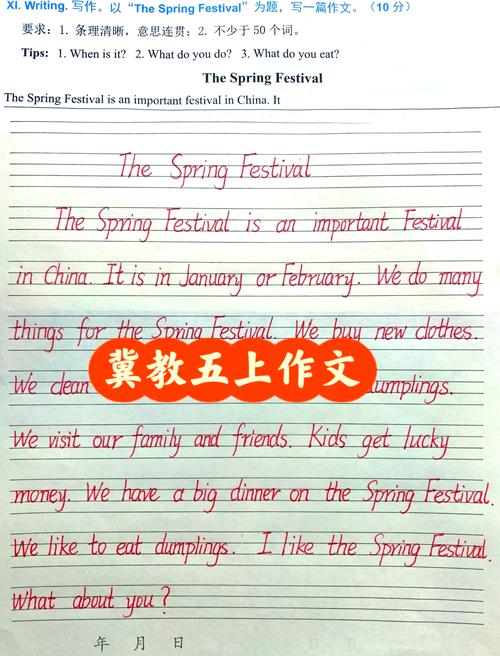
Before the festival, people clean their homes thoroughly. This is to "sweep away" bad luck from the past year. Families also decorate their doors and windows with red paper-cuts and couplets. Red is a lucky color in China.
On New Year's Eve, families get together for a big dinner. The most famous food is dumplings. After dinner, many people watch the Spring Festival Gala on TV. At midnight, we set off fireworks to welcome the new year.
During the festival, children are very happy because they get red envelopes with money from their elders. We also visit relatives and friends to say "Happy New Year."
The Spring Festival is a happy and warm time. I love it because I can be with my family and enjoy delicious food.
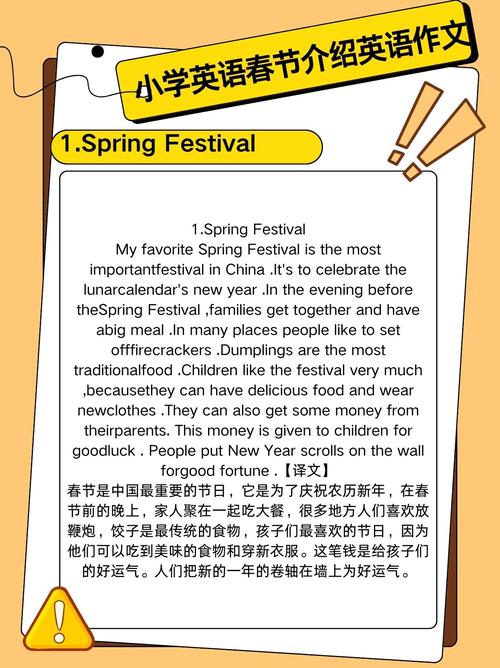
标准版 (Intermediate Level)
The Rich Tapestry of Chinese New Year Traditions
The Spring Festival, widely known as Chinese New Year, stands as the most cherished and traditional holiday in China. More than just a date on the calendar, it is a profound cultural phenomenon that revolves around themes of reunion, renewal, and hope. A rich tapestry of customs and traditions weaves together to create this vibrant celebration.
The festivities begin long before the New Year's Day. A crucial tradition is "Chenji" (除尘), or a thorough house cleaning. This act is symbolic; it is believed to sweep away any lingering bad luck and misfortunes from the previous year, making room for good fortune in the coming one. Homes are then adorned with vibrant decorations. The color red, symbolizing luck, joy, and prosperity, is omnipresent. Families paste poetic verses called "Chunlian" (春联) on their doorways and hang intricate "Jianzhi" (剪纸), or paper-cuts, on windows.
The pinnacle of the celebration is the New Year's Eve reunion dinner (Nianye Fan - 年夜饭). This is the most important meal of the year, where family members, often traveling from great distances, gather around the table to share a feast. Dishes are carefully chosen for their symbolic meanings; for instance, fish (鱼, yú) is served because its name sounds like "surplus," signifying abundance. Dumplings (饺子, jiǎozi) are also a staple in Northern China, their shape resembling ancient gold ingots, symbolizing wealth.
As the clock strikes midnight, the sky erupts in a spectacular display of fireworks and firecrackers. The loud noise is thought to scare away a mythical monster named "Nian" and evil spirits, ensuring a peaceful and prosperous new year. The following morning, children don new clothes and extend greetings to their elders, who in return gift them "Hongbao" (红包), red envelopes containing money, as a token of good luck and blessings. The subsequent days are spent visiting relatives and friends, a practice known as "Bainian" (拜年), to strengthen social bonds and share festive cheer.
In essence, the Spring Festival is a magnificent blend of solemn rituals and joyful celebrations. It is a time to honor family, embrace new beginnings, and carry forward the cultural heritage of the Chinese people.
高级版 (Advanced Level)
The Enduring Spirit of Spring Festival: A Journey Through Tradition and Time
For over a billion people, the arrival of Spring Festival, or Chinese New Year, transcends the mere marking of a new year. It is a deeply-rooted cultural odyssey, a grand tapestry woven from threads of ancient mythology, familial devotion, and the collective aspiration for renewal. This annual celebration serves as a powerful reminder of China's rich heritage and the enduring values that bind its people together.
The prelude to the festival is a period of meticulous preparation, steeped in symbolism. The act of "Chenji" (除尘), or "sweeping the dust," is far more than a domestic chore; it is a ritualistic purification of the home, a symbolic expulsion of the past year's hardships and ill omens to pave the way for incoming fortune. Concurrently, homes undergo a metamorphosis as they are adorned with auspicious decorations. The color red, imbued with cultural significance as the hue of luck, joy, and vitality, becomes the dominant palette. Poetic couplets, or "Chunlian" (春联), elegantly inscribed on red paper, are pasted on doorways, carrying wishes for prosperity and happiness. Delicate "Jianzhi" (剪纸), intricate paper-cuts, transform windows into canvases of folk art.
The heart of the festival undoubtedly lies in the New Year's Eve reunion dinner, the "Nianye Fan" (年夜饭). This culinary pilgrimage is a testament to the paramount importance of family in Chinese culture. It is a moment when geographical distances dissolve, and generations gather to share a meal that is as much about symbolism as it is about sustenance. Every dish is a narrative: the whole fish (鱼, yú) signifies a surplus of blessings for the coming year; the glutinous rice cakes (年糕, niángāo) promise "higher" achievements and prosperity; and the crescent-shaped dumplings (饺子, jiǎozi) in the north are reminiscent of ancient gold ingots, heralding wealth and fortune.
As the old year gives way to the new, the sky ignites in a symphony of light and sound. Fireworks and firecrackers are not merely spectacles but a ritualistic defense against the mythical beast "Nian," believed to be frightened by loud noises and the color red. This cacophony is a collective prayer for safety and good fortune. The dawn of the new year ushers in a new set of customs. Children, dressed in their finest new attire, formally greet their elders, offering auspicious phrases. In return, they receive "Hongbao" (红包), red envelopes containing money—a tangible embodiment of elders' love and blessings for the younger generation's future. The subsequent days are dedicated to "Bainian" (拜年), the custom of paying visits to relatives and friends, thereby reinforcing the intricate web of social relationships that forms the bedrock of community life.
Ultimately, the Spring Festival is a magnificent chronicle of resilience and continuity. It is a time-honored bridge connecting the present with the past, allowing modern society to pause, reflect, and partake in traditions that have sustained the Chinese spirit for millennia. It is more than a festival; it is a living, breathing testament to the power of culture, family, and hope.