中国春节英语作文如何写出文化特色?
作文示例 2026年1月17日 05:59:34 99ANYc3cd6
基础版 (适合初中或英语初学者)
My Favorite Festival - Spring Festival**
Spring Festival, also called Chinese New Year, is the most important festival in China. It usually comes in January or February.
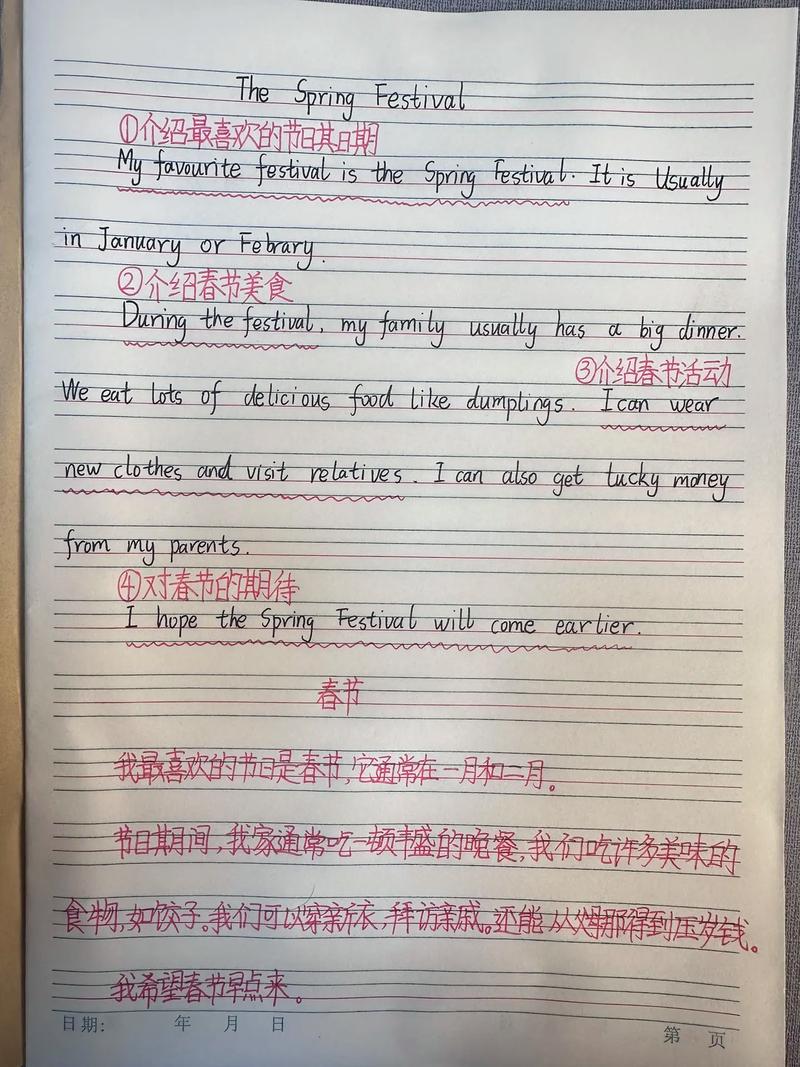
Before the festival, families clean their homes. This is to sweep away bad luck. They also buy new clothes and a lot of delicious food, like dumplings and fish.
On New Year's Eve, families get together for a big dinner. After dinner, we watch the Spring Festival Gala on TV. At midnight, we set off fireworks to welcome the new year.
During the festival, we visit our relatives and friends. We say "Happy New Year" to them and give them red envelopes with money. I love Spring Festival because it is a time for family, happiness, and new beginnings.
标准版 (适合高中生或中级英语学习者)
The Color and Joy of Chinese Spring Festival**
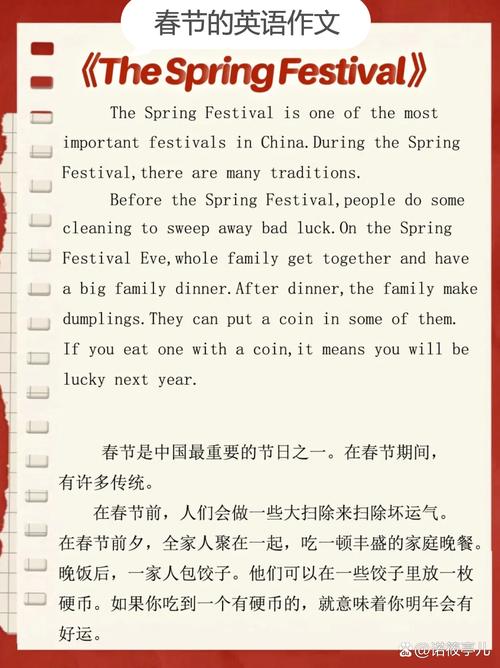
Chinese Spring Festival, or Chun Jie, is more than just a holiday; it is the most cherished and vibrant celebration in Chinese culture, marking the beginning of a new lunar year. This festival is a profound expression of family reunion, tradition, and hope for the future.
The preparations for Spring Festival begin weeks in advance. A crucial tradition is "sweeping the dust," where families thoroughly clean their homes to symbolically sweep away any misfortune from the past year and make way for good luck. Houses are adorned with vibrant red decorations, such as couplets with poetic verses pasted on doors and windows, and the character "福" (fú), meaning good fortune, often hung upside down, as its pronunciation is similar to "arrival" (到, dào).
The climax of the celebration is New Year's Eve. It is a time when, no matter how far they are, family members travel back home to share a sumptuous reunion dinner. This feast is a culinary delight, featuring dishes with symbolic meanings: fish for prosperity, dumplings for wealth, and sweet rice cakes for a higher position or better fortune in the coming year. After the meal, families gather to watch the annual Spring Festival Gala on television, a national tradition. As the clock strikes midnight, the sky erupts in a spectacular display of fireworks and firecrackers, believed to scare away evil spirits and bring good luck.
The first few days of the new year are spent visiting relatives and friends. This custom, known as "New Year visits" (拜年, bàinián), involves exchanging greetings of "Gong Xi Fa Cai" (恭喜发财), meaning "wishing you prosperity." Children are especially delighted as they receive red envelopes, or "hongbao," containing money from elders, which are tokens of good wishes and blessings.
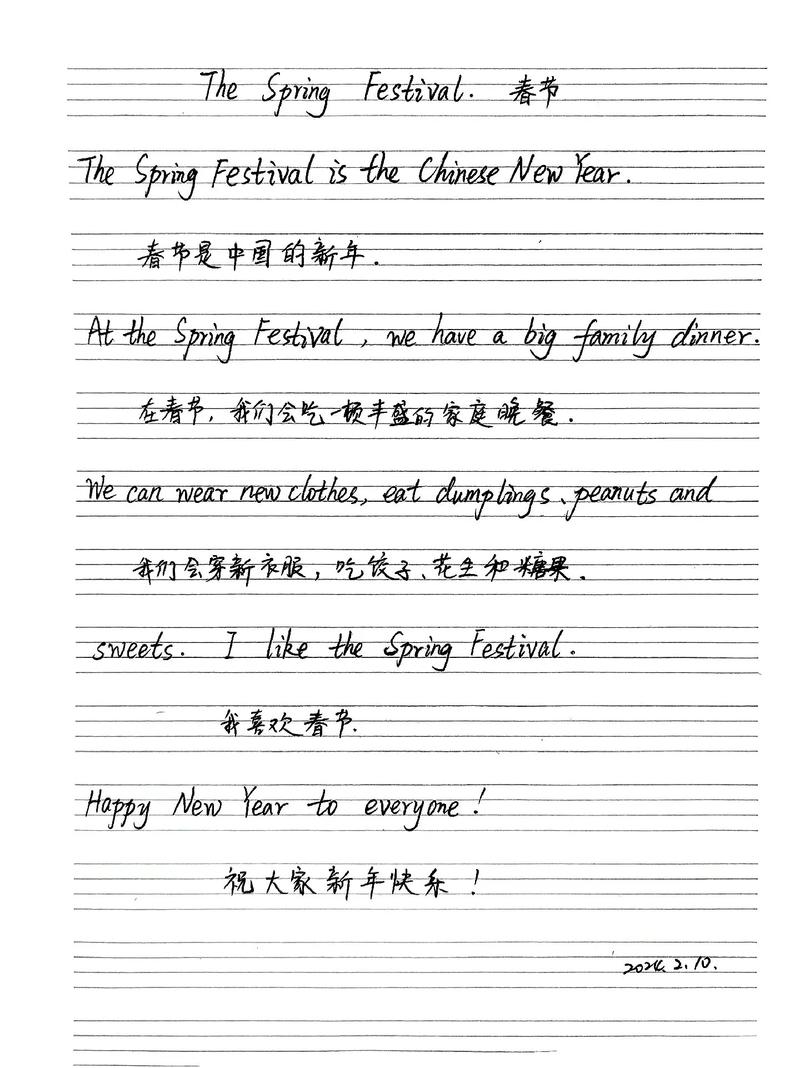
In essence, Chinese Spring Festival is a beautiful tapestry woven with threads of tradition, family bonds, and cultural richness. It is a time to honor the past, cherish the present, and welcome the future with open hearts and hopeful spirits.
进阶版 (适合大学生或高级英语学习者)
Spring Festival: A Tapestry of Tradition and Renewal**
In the heart of winter, as the old lunar year wanes and a new one is poised to begin, China transforms into a realm of crimson and gold. This is Spring Festival, or Chun Jie, the most significant and enduring cultural anchor in the Chinese calendar. Far more than a simple holiday, it is a profound, multi-sensory experience that encapsulates the core values of family, reverence for tradition, and an unwavering optimism for the future.
The festival's narrative unfolds in a series of time-honored rituals. The prelude is a flurry of activity known as "sweeping the dust" (扫尘, sǎochén), a meticulous cleaning of every nook and cranny of the home. This act is deeply symbolic, a physical and spiritual purging of the past year's hardships and bad luck, creating a pristine canvas for the new year's blessings. Following this, homes are adorned with an explosion of red—the auspicious color of joy and fortune. Poetic couplets (春联, chūnlián) are meticulously pasted on doorways, their calligraphic characters spelling out hopes for happiness and prosperity. The character "福" (fú), signifying good fortune, is often displayed upside down, a playful pun on its homophone for "arrival" (到, dào), symbolizing the arrival of good luck.
The apex of the festival is the New Year's Eve reunion dinner (年夜饭, niányèfàn). This is the moment when the geographical distances that separate families throughout the year dissolve, and the magnetic pull of kinship brings everyone back to the family table. The banquet is a symphony of symbolic dishes: a whole fish, representing abundance and a surplus (年年有余, niánnián yǒu yú); dumplings shaped like ancient gold ingots, for wealth; and sweet rice cakes (年糕, niángāo), to ensure a "higher position" or greater success in the coming year. As the meal concludes, families settle in to watch the Spring Festival Gala, a national television event that has become a modern tradition. At the stroke of midnight, the sky ignites. The thunderous crack of firecrackers and the brilliant flashes of fireworks are not merely spectacles but are believed to drive away evil spirits (年兽, Niánshòu) and awaken the world to a new, auspicious dawn.
The subsequent days are dedicated to extending these festive blessings outward. The tradition of "New Year visits" (拜年, bàinián) involves paying respects to elders and friends, exchanging warm greetings and the auspicious phrase "Gong Xi Fa Cai" (恭喜发财), a wish for prosperity. For children, the most anticipated tradition is the receiving of "hongbao" (红包), red envelopes containing money, bestowed by elders as a token of love and a blessing for a healthy and prosperous future.
Ultimately, Chinese Spring Festival is a magnificent tapestry, intricately woven with threads of ancient customs, familial devotion, and cultural identity. It is a time-honored cycle of renewal, where the past is honored, the present is celebrated with loved ones, and the future is welcomed with a heart full of hope and joy.
核心词汇和短语 (Key Vocabulary & Phrases)
- Spring Festival / Chinese New Year: 春节
- Lunar New Year: 农历新年
- Reunion Dinner: 团圆饭
- Red Envelopes (Hongbao): 红包
- Fireworks / Firecrackers: 烟花 / 鞭炮
- Couplets: 春联
- "Fu" Character (福): 福字
- "Gong Xi Fa Cai": 恭喜发财 (Wishing you prosperity)
- "Nian Nian You Yu": 年年有余 (May you have a surplus year after year)
- "Sweeping the Dust": 扫尘 (To clean the house)
- New Year Visits (Bainian): 拜年 (To visit relatives and friends)
- Symbolic Meaning: 象征意义
- Auspicious: 吉祥的
- Prosperity / Fortune: 富裕 / 财富
- Tradition / Custom: 传统 / 习俗
- Family Reunion: 家庭团聚
- Cultural Heritage: 文化遗产
- To usher in: 迎来
- To celebrate: 庆祝
- To adorn: 装饰
希望这些版本和词汇能对您有所帮助!您可以根据自己的需要选择合适的版本进行修改和使用。