英语作文连接词怎么用最有效?
作文示例 2026年1月16日 04:54:38 99ANYc3cd6
下面我将连接词按照它们在文章中不同功能进行分类,并提供清晰的解释和例句,方便你理解和记忆。
表示补充和递进
这类连接词用于在已有信息的基础上增加新的、相关的信息,或使观点更进一层。

(图片来源网络,侵删)
| 连接词 | 词性 | 功能与用法 | 例句 |
|---|---|---|---|
| And | 连词 | 最基本、最常用的连接词,连接词、短语或句子。 | He is a talented writer, and his novels are bestsellers. |
| Furthermore / Moreover | 副词 | 比 "and" 更正式,用于强调或补充一个更有力的论点。 | The new policy is environmentally friendly. Furthermore, it will boost the economy. |
| In addition / Additionally | 副词 | 用于在已有信息之外,增加一个同样重要的新信息。 | We need to finish the report by Friday. In addition, we must prepare a presentation. |
| Not only... but also... | 连词组 | 连接两个并列的成分,表示“不仅………”,强调后者。 | The program is not only educational but also entertaining. |
| What's more | 短语 | 口语和书面语中均可使用,语气比 "furthermore" 稍显随意,引出更有说服力的信息。 | The hotel is in a great location. What's more, the staff is incredibly friendly. |
表示转折和对比
这类连接词用于引出与前面观点相反、不同或形成对比的信息。
| 连接词 | 词性 | 功能与用法 | 例句 |
|---|---|---|---|
| But | 连词 | 最常用的转折连词,表示直接的对比或转折。 | She is very intelligent, but she is quite lazy. |
| However | 副词 | 比 "but" 更正式,可以置于句首、句中或句末,引出与上文相反的观点。 | The plan was well-conceived. However, it failed due to a lack of funding. |
| Nevertheless / Nonetheless | 副词 | 非常正式,表示“尽管如此”,强调尽管有前面提到的困难或相反情况,后面的结论依然成立。 | The journey was long and tiring. Nevertheless, we enjoyed it immensely. |
| On the other hand | 短语 | 用于引出与前面观点形成对比的另一个方面,常与 "on the one hand" 搭配使用。 | Living in the city offers convenience. On the other hand, it can be very noisy and crowded. |
| In contrast / By contrast | 短语 | 用于清晰地指出两件事物或观点之间的显著差异。 | The north of the country is mountainous. In contrast, the south is mostly flat. |
| While / Whereas | 从属连词 | 用于引导从句,表示两个事物在某方面形成对比。 | While I enjoy the summer, my sister prefers the winter. |
| Despite / In spite of | 介词/介词短语 | 后接名词或名词短语,表示“尽管……”。 | Despite the bad weather, they went on a picnic. |
表示因果
这类连接词用于解释原因或说明结果,使文章的逻辑链条更清晰。
| 连接词 | 词性 | 功能与用法 | 例句 |
|---|---|---|---|
| Because / Since / As | 从属连词 | 引导原因状语从句,放在主句前或后。 | Because it was raining, we decided to stay home. |
| Therefore / Thus / Hence | 副词 | 引出结果或结论,通常放在句首,用逗号隔开。 | The evidence is unreliable. Therefore, we cannot draw a firm conclusion. |
| Consequently / As a result | 副词 | 引出直接导致的结果,语气比 "therefore" 稍弱。 | He missed the last train. As a result, he had to take a taxi. |
| Due to / Owing to | 介词短语 | 后接名词或名词短语,表示“因为”,常用于句首。 | The flight was delayed due to bad weather. |
| So | 连词 | 最常用的表示结果的连词,连接两个句子,语气较口语化。 | It was getting late, so we went home. |
| This is why... / This is because... | 句型 | 用于解释原因,使表达更自然。 | He failed the exam. This is why he looks so upset. |
表示举例
这类连接词用于用具体的例子来支撑前面的观点或解释。
| 连接词 | 词性 | 功能与用法 | 例句 |
|---|---|---|---|
| For example / For instance | 短语 | 引出具体的例子,放在句首或句中。 | Many countries have a lot of debt. For example, Greece has faced a severe financial crisis. |
| Such as | 介词 | 用于列举同类事物中的几个例子。 | I enjoy various sports, such as swimming, running, and basketball. |
| To illustrate | 动词短语 | 意为“为了说明”,引出例子,比 "for example" 更正式。 | The economy is in a recession. To illustrate, the unemployment rate has risen by 5%. |
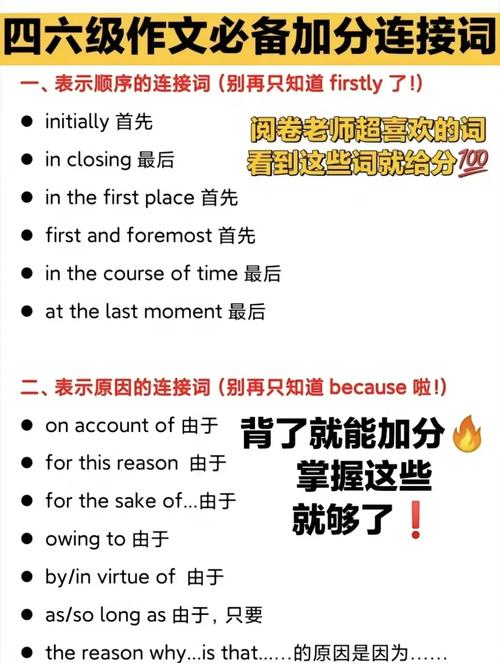
表示顺序和序列
这类连接词用于按时间、步骤或重要性顺序组织信息。
(图片来源网络,侵删)
| 连接词 | 词性 | 功能与用法 | 例句 |
|---|---|---|---|
| First(ly) / Second(ly) / Third(ly) | 副词 | 用于列举要点,"firstly" 可省略,直接用 "first"。 | First, preheat the oven to 200°C. Second, mix the flour and sugar. |
| Finally / Lastly | 副词 | 用于列举的最后一项。 | Finally, pour the mixture into the baking pan. |
| Next / Then | 副词 | 表示下一步要做什么。 | Read the instructions carefully. Next, follow the steps in order. |
| After that / Following that | 短语 | 表示在某一事件之后。 | We had dinner at the restaurant. After that, we went to see a movie. |
| Meanwhile | 副词 | 表示与此同时,用于描述两个同时发生的事件。 | I was cooking dinner. Meanwhile, my husband was setting the table. |
表示总结和结论
这类连接词用于总结上文,引出最终结论。
| 连接词 | 词性 | 功能与用法 | 例句 |
|---|---|---|---|
| In conclusion / To conclude | 短语 | 用于文章或段落的结尾,引出总结。 | In conclusion, regular exercise is essential for a healthy lifestyle. |
| To sum up / In summary | 短语 | 与 "in conclusion" 类似,用于简要概括要点。 | To sum up, the main causes of the problem were poor management and a lack of funding. |
| Overall / All in all | 副词 | 表示“,对整体情况进行评价。 | Overall, it was a successful and enjoyable event. |
| In a nutshell | 短语 | 意为“简而言之”,非常口语化,适合非正式写作。 | In a nutshell, we need to work harder and smarter. |
表示强调
这类连接词用于突出某个观点或信息的重要性。
| 连接词 | 词性 | 功能与用法 | 例句 |
|---|---|---|---|
| Above all | 短语 | 表示“最重要的是”,强调最重要的方面。 | When learning a new language, above all, you should not be afraid to make mistakes. |
| Indeed | 副词 | 用于加强肯定或同意的语气,意为“确实,。 | He is a very talented musician. Indeed, he is one of the best in the world. |
| In fact | 短语 | 用于引出更具体、更有说服力或相反的信息。 | I thought the movie was boring. In fact, I almost fell asleep. |
| Certainly / Undoubtedly | 副词 | 表示“毫无疑问,确实”,加强肯定语气。 | Undoubtedly, technology has changed the way we communicate. |
使用建议:
- 避免重复: 不要在一篇文章中反复使用同一个连接词,用了 "first", "second", "third",就不要在另一处也用 "firstly", "secondly", "thirdly"。
- 注意位置: 大部分副词类连接词(如 "however", "therefore", "furthermore")可以放在句首、句中或句末,放在句首时,后面通常用逗号隔开。
- 理解语境: 选择哪个连接词取决于你想要表达的精确逻辑关系,表示轻微的转折用 "but",表示强烈的让步用 "nevertheless"。
- 熟能生巧: 在平时的阅读中多留意这些连接词的用法,在自己的写作中刻意练习,它们就会成为你写作的自然工具。
希望这份详细的总结对你的英语写作有所帮助!

(图片来源网络,侵删)