八年级重点句子翻译有哪些易错点?
校园之窗 2026年1月12日 05:46:14 99ANYc3cd6
第一部分:核心语法句型
这些是八年级的绝对重点,考试和写作中频繁出现。
比较级和最高级
这是八年级的语法核心,用于描述事物的差异。
(图片来源网络,侵删)
-
结构:
A + 比较级 + than + B(A比B更...) -
翻译: A比B更...
-
例句:
- This book is more interesting than that one.
- 这本书比那本更有趣。
- He runs faster than his brother.
- 他跑得比他哥哥快。
-
结构:
One of the + 最高级 + 复数名词(最...的之一)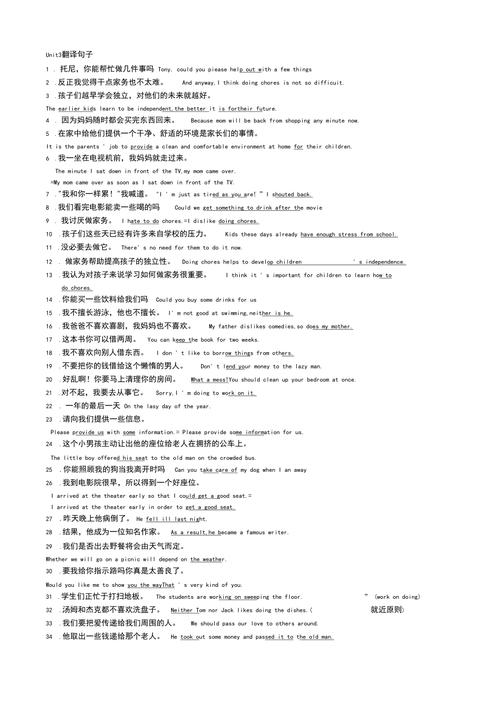 (图片来源网络,侵删)
 -
翻译: 最...的之一
-
例句:
- The Yellow River is one of the longest rivers in China.
- 黄河是中国最长的河流之一。
- She is one of the most popular students in our class.
- 她是我们班最受欢迎的学生之一。
情态动词
情态动词本身有词义,后接动词原形,表示说话人的语气或态度。
-
can / could(能,会,可以) (图片来源网络,侵删)
- 例句: I can swim. 我会游泳。
- 例句: Could you help me, please? 你能帮我一下吗?(比can更委婉)
-
may / might(可以,可能)- 例句: You may go now. 你现在可以走了。
- 例句: It might rain tomorrow. 明天可能会下雨。
-
must(必须,一定)- 例句: You must finish your homework on time. 你必须按时完成作业。
- 例句: He must be at home. 他一定在家。(对现在情况的推测)
-
should(应该)- 例句: We should keep quiet in the library. 我们在图书馆里应该保持安静。
- 例句: You should eat more vegetables. 你应该多吃蔬菜。
过去进行时
- 结构:
was/were + 动词-ing - 用法: 表示过去某个时间点正在发生的动作。
- 翻译: 正在...
- 例句:
- I was reading a book at 8 o'clock last night.
- 昨天晚上8点,我正在看书。
- They were having an English class when the teacher came in.
- 老师进来的时候,他们正在上英语课。
现在完成时
- 结构:
have/has + 动词的过去分词 - 用法1: 表示过去发生且对现在有影响的动作。
- 例句: He has broken his leg. 他把腿摔断了。(现在腿还没好)
- 例句: I have already finished my homework. 我已经做完作业了。(现在作业完成了)
- 用法2: 表示从过去开始持续到现在的动作或状态。
- 例句: I have lived here for ten years. 我在这里住了十年了。(现在还住在这里)
- 例句: She has been a teacher since 2010. 她从2010年起就是一名老师了。(现在还是老师)
被动语态
- 结构:
be + 动词的过去分词 - 用法: 强调动作的承受者,而不是执行者。
- 翻译: 被...
- 例句:
- This book was written by Lu Xun. 这本书是鲁迅写的。
- Trees should be planted in spring. 树应该在春天被种植。(常用
should be done表示“应该被做”) - The door is closed. 门是关着的。(状态被动)
第二部分:常用重点句型
这些句型在写作和口语中非常实用,能让你的表达更地道。
It's + 形容词 + for sb. + to do sth.
- 翻译: 做某事是...
- 例句: It's important for us to learn English well.
学好英语很重要。
- 例句: It's not easy for him to solve this problem.
解决这个问题不容易。
too...to... / so...that...
too...to...(太...而不能...)- 例句: The box is too heavy for me to carry.
这个箱子太重了,我搬不动。
- 例句: The box is too heavy for me to carry.
so...that...(..以至于...)- 例句: The box is so heavy that I can't carry it.
这个箱子如此重,以至于我搬不动。(意思和上面一样,但句式不同)
- 例句: The box is so heavy that I can't carry it.
either...or... / neither...nor...
either...or...(要么...要么...)- 例句: You can either stay at home or go out to play.
你要么待在家里,要么出去玩。
- 例句: You can either stay at home or go out to play.
neither...nor...(既不...也不...)- 例句: Neither he nor I am a teacher.
他和我都不是老师。(注意:be动词的形式和离它最近的主语保持一致)
- 例句: Neither he nor I am a teacher.
not only...but also...
- 翻译: 不仅.....
- 例句: He not only sings well, but he can also dance.
- 他不仅歌唱得好,而且还会跳舞。(注意:
not only放在句首时,前半句要部分倒装,如:Not only does he sing well, but he can also dance.)
- 他不仅歌唱得好,而且还会跳舞。(注意:
spend / cost / pay / take 的区别
- sb. spend (time/money) on sth. / (in) doing sth.
- 翻译: 某人花费(时间/金钱)在...
- 例句: I spent two hours doing my homework.
我花了两个小时做作业。
- sth. cost (sb.) money
- 翻译: 某物花费(某人)金钱
- 例句: This dictionary cost me 100 yuan.
这本词典花了我100块钱。
- sb. pay (money) for sth.
- 翻译: 某人为某物付钱
- 例句: I paid 50 yuan for the T-shirt.
我为这件T恤付了50块钱。
- It takes sb. time to do sth.
- 翻译: 做某事花费某人时间
- 例句: It took me half an hour to get to school.
我花了半小时到学校。
第三部分:话题相关重点句子
结合八年级常见的话题,积累一些实用的句子。
关于交通和旅行
- How do you get to school? 你怎么去上学?
- I usually go to school by bus / on foot. 我通常坐公交车/步行去上学。
- It takes about 20 minutes to walk to school. 走路上学大约需要20分钟。
- I'd like to visit the Great Wall. 我想参观长城。
关于健康和生活习惯
- You should eat more fruit and vegetables. 你应该多吃水果和蔬菜。
- Doing exercise is good for your health. 做运动对你的健康有益。
- I have a headache. 我头疼。
- You'd better see a doctor. 你最好去看医生。
关于兴趣和爱好
- What's your hobby? 你的爱好是什么?
- My hobby is collecting stamps / reading books. 我的爱好是集邮/读书。
- I am interested in playing basketball. 我对打篮球感兴趣。
- It's exciting / relaxing / boring. 这令人兴奋/放松/无聊。
关于建议和邀请
- What should I do? 我该怎么办?
- You should talk to your parents. 你应该和你的父母谈谈。
- Let's go to the movies. 我们去看电影吧。
- Would you like to come to my party? 你想来参加我的派对吗?
- I'd love to / I'd love to, but I'm afraid I can't. 我很乐意/我很乐意,但是恐怕我不能。
学习建议
- 理解而非死记: 不要只背中文意思,要理解每个句型的结构和用法。
- 造句练习: 学完一个句型,立刻用它来造几个和自己的生活相关的句子,这样记得更牢。
- 多读多听: 阅读简单的英语文章或听英文小故事,看看这些句型是如何在实际语境中使用的。
- 整理笔记: 把这些重点句型整理到你的笔记本上,定期复习。
希望这份总结对你有帮助!加油!