春节的习俗英语作文
作文示例 2026年1月3日 23:19:12 99ANYc3cd6
基础版 (适合初中或英语初学者)
My Favorite Spring Festival Tradition**
Spring Festival, also known as Chinese New Year, is the most important festival in China. It is a time for family reunions and celebrations. There are many special customs during this time.
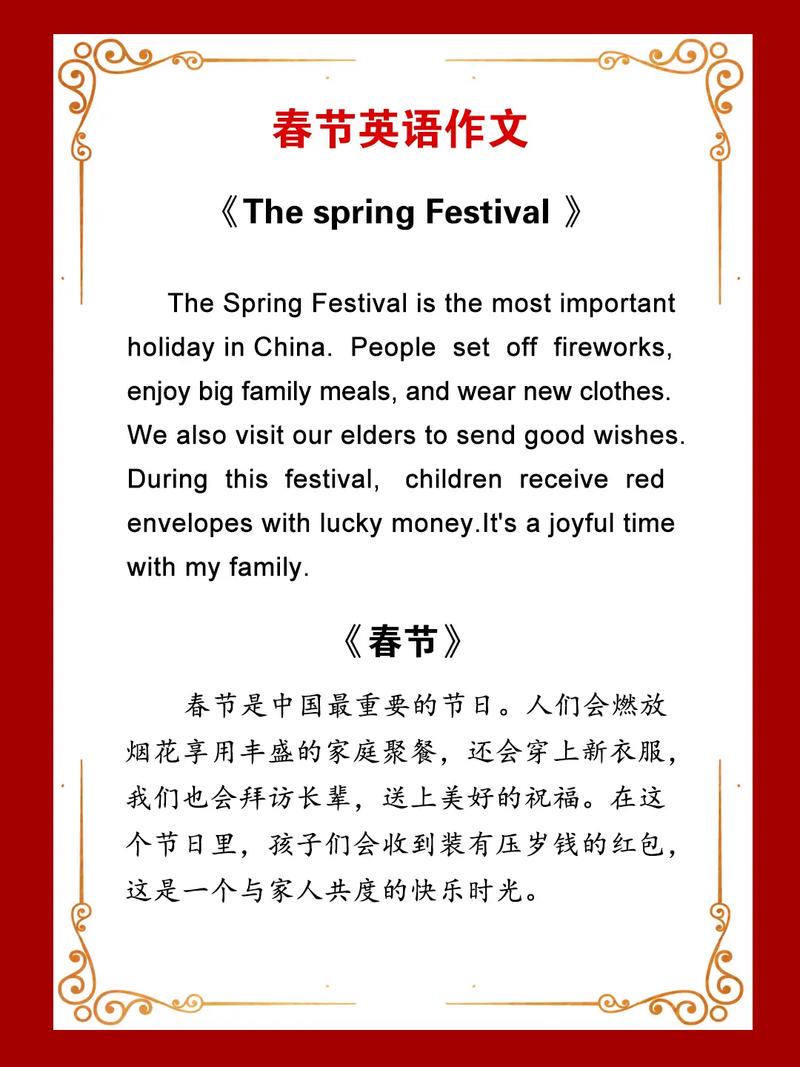
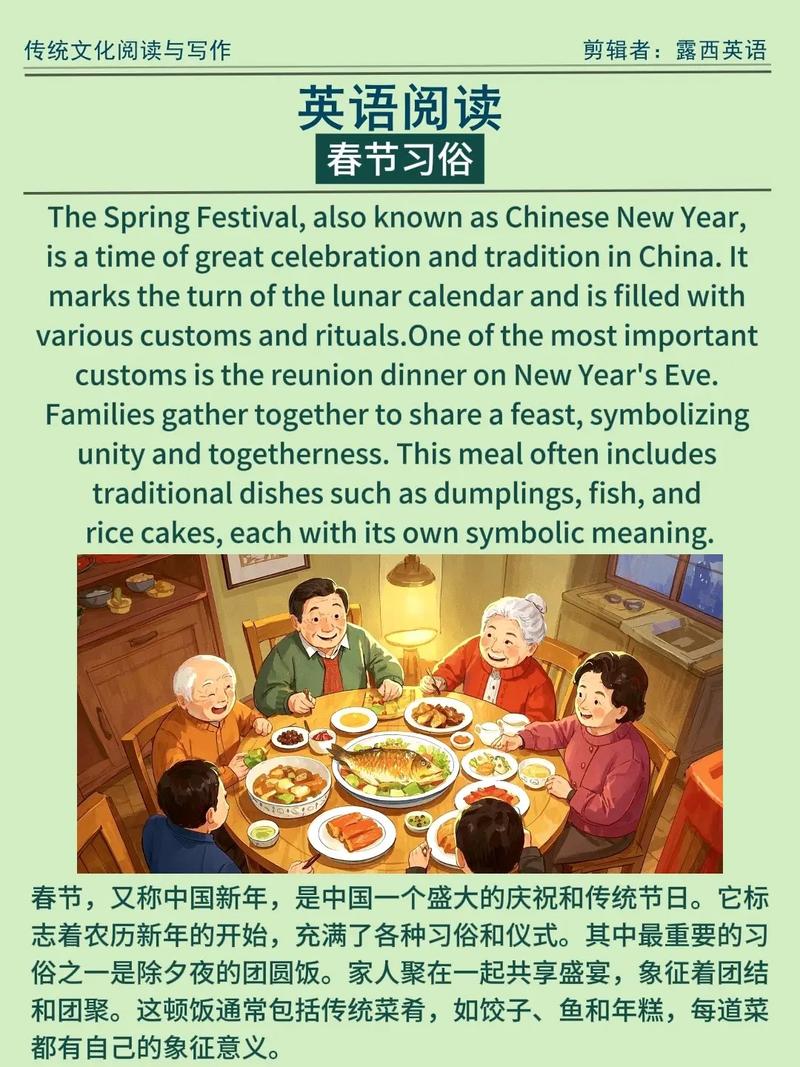
One of the most important traditions is having a big family reunion dinner on New Year's Eve. My family gets together at my grandparents' house. We eat delicious food like dumplings and fish. Fish is a must because its name "yú" sounds like "surplus," which means we will have a good year in the future.
After dinner, we watch the Spring Festival Gala on TV. It is a very popular show with funny skits and beautiful music. At midnight, we set off fireworks to welcome the new year. The loud noises and bright lights make the night very exciting.
On New Year's Day, we visit our relatives and friends. We say "Happy New Year" and give them red envelopes, called "hongbao," for good luck. I love getting hongbao!
I really love Spring Festival because it brings my family closer and I always have a wonderful time.
标准版 (适合高中生或中级英语学习者)
The Rich Traditions of the Chinese Spring Festival**
The Spring Festival, or Chinese New Year, stands as the most cherished and vibrant festival in Chinese culture, marking the beginning of a new lunar year. It is a time steeped in rich traditions, symbolizing new beginnings, family unity, and the ushering out of the old to welcome the new.
The festivities officially kick off with a thorough house cleaning, known as "sweeping the dust." This ritual is not merely about cleanliness; it is a symbolic act of sweeping away bad luck and misfortunes from the past year, making way for good fortune to enter. The climax of the celebrations is the New Year's Eve reunion dinner. This is the most significant meal of the year, where family members, near and far, travel back home to gather around the table. The meal is a feast of symbolic dishes: dumplings for wealth, fish for prosperity, and sweet rice cakes for a higher position or better fortune in the coming year.
Following the dinner, families often stay up late to "guard the year," hoping to extend their parents' lives. The night is filled with joy, often centered around watching the annual Spring Festival Gala on television. As the clock strikes midnight, the sky erupts in a spectacular display of fireworks and firecrackers, believed to scare away evil spirits and bring good luck.

The first day of the new year is dedicated to visiting relatives and friends. This practice, known as "New Year visits," involves paying respects to elders and exchanging greetings of "Gong Xi Fa Cai," which means "wishing you prosperity." A key custom for the younger generation is receiving red envelopes, or "hongbao," containing money, which is a token of good luck and blessings.
In essence, the Spring Festival is more than just a holiday; it is a profound cultural experience that strengthens family bonds and renews hope for the future.
进阶版 (适合大学生或高级英语学习者)
The Spring Festival: A Tapestry of Tradition and Cultural Renewal**
The Spring Festival, or Chinese New Year, transcends the definition of a mere holiday; it is the most significant cultural cornerstone in the Chinese calendar, a grand tapestry woven from centuries of tradition, symbolism, and heartfelt human connection. Celebrated by billions, it is a period that encapsulates the essence of family, hope, and the cyclical nature of time.
The prelude to the festival is as rich as the event itself. In the preceding weeks, a flurry of activity ensues. Homes are meticulously cleaned in a ritual called "sǎn chén" (扫尘), or "sweeping the dust," a symbolic act of purging the old year's misfortunes to create a pristine canvas for good fortune. Doors and windows are adorned with vibrant red couplets, poetic verses written on red paper, which invoke prosperity and ward off evil spirits. The color red, symbolizing luck and joy, becomes the dominant hue in every decoration.
The apex of the festival is the Reunion Dinner on New Year's Eve. This is less of a meal and more of a sacred family ritual, where geographical distances dissolve in the warmth of kinship. The banquet is a symphony of symbolic dishes: whole fish, representing abundance and surplus; dumplings, shaped like ancient gold ingots for wealth; and glutinous rice cakes, "niangao," signifying a "higher" or "better" year. It is a time for storytelling, sharing gratitude, and reaffirming familial bonds.
As the old year gives way to the new, the atmosphere crackles with anticipation. The stroke of midnight is greeted not with a whisper, but with a thunderous symphony of fireworks and firecrackers. This cacophony is believed to scare away the mythical beast "Nian" and evil spirits, while the brilliant lights illuminate the path for a prosperous future. The first day is dedicated to "New Year visits" (bàinián), where people traverse the city to pay respects to elders and exchange auspicious greetings. The custom of giving "hongbao" (red envelopes) is a cherished tradition, where elders gift money in red packets to the younger generation, bestowing blessings of good luck and health.
Ultimately, the Spring Festival is a profound cultural narrative. It is a time for introspection, reunion, and renewal. It reaffirms the importance of family and provides a collective, hopeful embrace as a community steps forward into the promise of a new beginning.
核心词汇与短语 (Key Vocabulary & Phrases)
名词:
- Spring Festival / Chinese New Year: 春节
- Tradition / Custom: 传统 / 习俗
- Reunion: 团聚
- Symbolism: 象征意义
- Prosperity / Fortune / Wealth: 繁荣 / 运气 / 财富
- Evil spirits: 邪恶的灵魂
- Red envelope (Hongbao): 红包
- Fireworks / Firecrackers: 烟花 / 鞭炮
- Reunion dinner: 团圆饭
- Dumplings: 饺子
- Fish: 鱼
- Rice cake (Niangao): 年糕
动词:
- Celebrate: 庆祝
- Gather / Reunite: 聚集 / 团聚
- Sweep away (bad luck): 扫除 (坏运气)
- Adorn / Decorate: 装饰
- Usher in (the new year): 迎来 (新年)
- Ward off (evil spirits): 避开 (邪灵)
- Pay respects to (elders): 向 (长辈) 表示敬意
形容词/副词:
- Traditional / Cherished / Significant: 传统的 / 珍视的 / 重要的
- Vibrant / Joyful / Festive: 充满活力的 / 愉快的 / 节日的
- Symbolic / Auspicious: 象征性的 / 吉祥的
- Thoroughly / Meticulously: 彻底地 / 细致地
短语:
- Family reunion: 家庭团聚
- New Year's Eve: 除夕
- Spring Festival Gala: 春节联欢晚会
- Set off fireworks: 放烟花
- Visit relatives and friends: 走亲访友
- Wish someone a happy new year: 祝某人新年快乐
- For good luck: 为了好运
- The beginning of a new lunar year: 农历新年的开始