八年级英语上册重点单词有哪些?
校园之窗 2025年12月17日 13:01:24 99ANYc3cd6
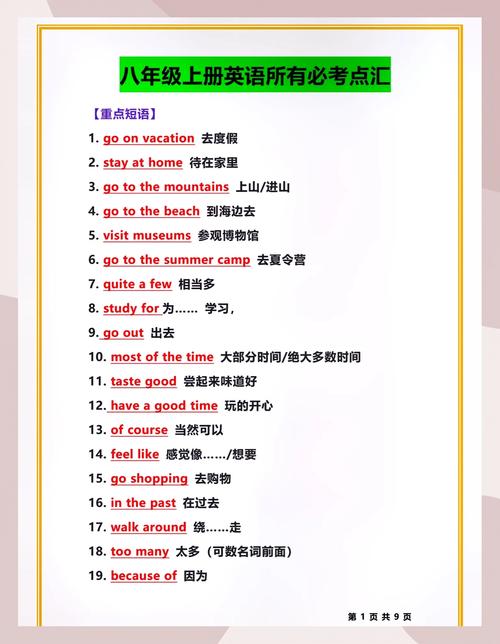
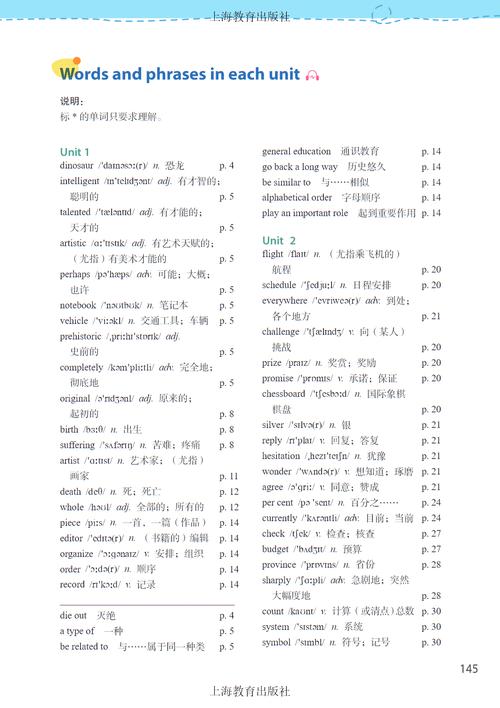
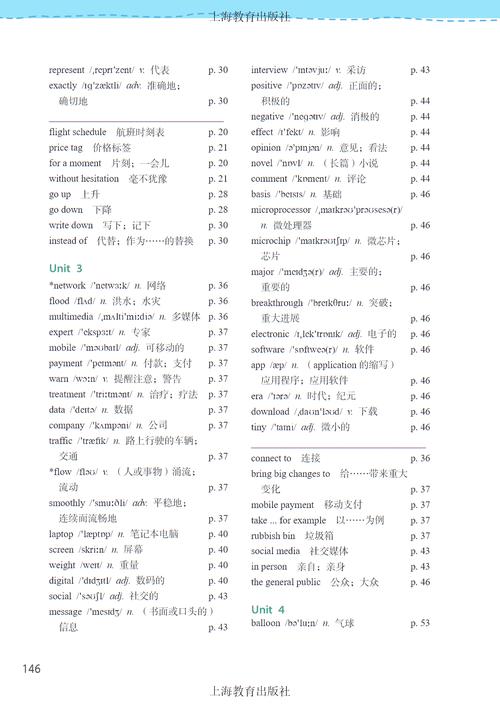
下面我将这些重点单词进行分类整理,并提供核心词义、常用搭配和例句,帮助你更好地理解和记忆。
第一类:日常活动与频率
这类单词用于描述日常做什么以及发生的频率,是八年级上册的核心内容。
(图片来源网络,侵删)
| 单词 | 词性 | 核心词义 | 常用搭配/例句 |
|---|---|---|---|
| exercise | v./n. | 锻炼,运动 | v. You should exercise more. (你应该多锻炼。) n. Morning exercise is good for you. (晨练对你有好处。) |
| shop | v. | 购物 | Let's go shopping this weekend. (我们这周末去购物吧。) |
| skateboard | v./n. | 踩滑板 | He skateboards to school every day. (他每天踩滑板去上学。) |
| swing | v./n. | (使)摆动;(荡)秋千 | The children are swinging on the swings. (孩子们正在荡秋千。) |
| ever | adv. | 曾经(用于疑问句或否定句) | Have you ever been to Beijing? (你曾经去过北京吗?) |
| never | adv. | 从不,决不 | I never eat junk food. (我从不吃垃圾食品。) |
| hardly | adv. | 几乎不 | I hardly ever watch TV. (我几乎不看电视。) |
| once | adv. | 一次;曾经 | I go to the cinema once a month. (我一个月去看一次电影。) |
| twice | adv. | 两次 | I brush my teeth twice a day. (我一天刷两次牙。) |
| surf | v. | 冲浪;浏览(网页) | They love to surf the Internet. (他们喜欢上网。) |
| program | n. | 节目;程序 | What's your favorite TV program? (你最喜欢的电视节目是什么?) |
第二类:兴趣爱好
这类单词用于谈论个人喜好和休闲活动。
| 单词 | 词性 | 核心词义 | 常用搭配/例句 |
|---|---|---|---|
| join | v. | 加入;参加 | I want to join the music club. (我想加入音乐俱乐部。) |
| club | n. | 俱乐部 | Are you in the swimming club? (你在游泳俱乐部吗?) |
| talent | n. | 天赋,才能 | She has a talent for dancing. (她有跳舞的天赋。) |
| show | n./v. | 表演;展示 | He is in a talent show. (他参加了才艺表演。) Can you show me your new book? (你能把你的新书给我看看吗?) |
| beautiful | adj. | 美丽的,漂亮的 | She is a beautiful girl. (她是个漂亮的女孩。) |
| fantastic | adj. | 极好的,了不起的 | The movie was fantastic! (那部电影太棒了!) |
| boring | adj. | 乏味的,无聊的 | The lesson is very boring. (这节课非常无聊。) |
| difficult | adj. | 困难的 | This math problem is very difficult. (这道数学题很难。) |
| relaxing | adj. | 令人放松的 | Reading is a relaxing activity. (阅读是一种令人放松的活动。) |
| same | adj. | 同样的,相同的 | We are in the same class. (我们在同一个班。) |
第三类:健康与建议
谈论身体状况、生活习惯和给出建议。
| 单词 | 词性 | 核心词义 | 常用搭配/例句 |
|---|---|---|---|
| health | n. | 健康 | Good health is very important. (健康非常重要。) |
| habit | n. | 习惯 | I have a good habit of getting up early. (我有早起的良好习惯。) |
| junk food | n. | 垃圾食品 | Eating too much junk food is bad for you. (吃太多垃圾食品对你不好。) |
| coffee | n. | 咖啡 | I like drinking coffee in the morning. (我喜欢早上喝咖啡。) |
| sleep | v./n. | 睡觉 | You should get enough sleep. (你应该获得足够的睡眠。) |
| dentist | n. | 牙医 | I'm afraid of the dentist. (我害怕牙医。) |
| should | modal v. | 应该 | You should eat more vegetables. (你应该多吃蔬菜。) |
| advice | n. | 建议,忠告 | Can you give me some advice? (你能给我一些建议吗?) |
| lie | v. | 躺;说谎 | Don't lie on the bed. (别躺在床上。) He is lying. (他在说谎。) |
| until | prep./conj. | 直到……为止 | I will wait until you come back. (我会等到你回来。) |
第四类:交通与旅行
描述出行方式和旅行经历。
| 单词 | 词性 | 核心词义 | 常用搭配/例句 |
|---|---|---|---|
| subway | n. | 地铁 | I usually go to school by subway. (我通常乘地铁去上学。) |
| train | n. | 火车 | We traveled to Shanghai by train. (我们乘火车去上海旅行。) |
| car | n. | 小汽车 | My father drives a car to work. (我父亲开车上班。) |
| bus stop | n. | 公共汽车站 | The bus stop is over there. (公共汽车站在那边。) |
| transportation | n. | 交通,运输 | What's your favorite transportation? (你最喜欢的交通方式是什么?) |
| far | adj./adv. | 远的(地) | My home is very far from school. (我家离学校很远。) |
| quick | adj. | 快的,迅速的 | This is a quick way to get there. (这是去那里的一个快捷方式。) |
| ride | v./n. | 骑(车);搭乘 | Let's go for a bike ride. (我们去骑自行车吧。) I rode a horse yesterday. (我昨天骑了马。) |
| get to | phrasal v. | 到达 | What time do you get to school? (你几点到校?) |
| leave for | phrasal v. | 动身去(某地) | We are leaving for Beijing tomorrow. (我们明天动身去北京。) |
第五类:其他高频重要词汇
| 单词 | 词性 | 核心词义 | 常用搭配/例句 |
|---|---|---|---|
| decide | v. | 决定 | I decide to learn a new language. (我决定学一门新语言。) |
| plan | v./n. | 计划 | We are planning a trip. (我们正在计划一次旅行。) What's your plan for the summer holiday? (你暑假的计划是什么?) |
| hope | v./n. | 希望;希望 | I hope to see you soon. (我希望很快能见到你。) |
| difference | n. | 不同;差异 | What's the difference between the two words? (这两个词有什么不同?) |
| compare | v. | 比较 | Please compare the two pictures. (请比较这两幅画。) |
| expensive | adj. | 昂贵的 | This watch is too expensive. (这块表太贵了。) |
| cheap | adj. | 便宜的 | These shoes are very cheap. (这双鞋很便宜。) |
| crowded | adj. | 拥挤的 | The bus was very crowded. (公交车非常拥挤。) |
| pollution | n. | 污染 | We should try to reduce pollution. (我们应该努力减少污染。) |
| future | n. | 将来 | What do you want to be in the future? (你将来想做什么?) |
学习建议
- 分类记忆:按照上面的主题分类来背单词,可以形成知识网络,更容易联想和记忆。
- 词块学习:不要孤立地背单词,要连同它的常用搭配一起记,记
exercise时,一起记do exercise或take exercise。 - 语境应用:把单词放到句子里去理解和记忆,可以自己造句,或者用单词造一个与自己生活相关的小故事。
- 及时复习:利用艾宾浩斯遗忘曲线,定期复习学过的单词,可以记得更牢固。
希望这份详细的整理对你的学习有帮助!加油!
(图片来源网络,侵删)
(图片来源网络,侵删)