学生英语作文如何提升?
作文示例 2026年1月29日 05:44:17 99ANYc3cd6
第一部分:英语写作全流程指南
一篇好的作文不是一蹴而就的,而是需要经过精心的准备和修改。
Step 1: Pre-writing (动笔前准备)
- 审题: 仔细阅读题目要求,明确你需要写什么,关键词是什么?是要求描述、议论、说明还是讲述一个故事?
- 头脑风暴: 围绕主题,快速写下你能想到的所有相关的单词、短语和想法,不用管语法和顺序,只求思路开阔。
- 列提纲: 这是最关键的一步,将你的想法整理成一个有逻辑的结构。
- 开头段,引出话题,表明你的观点或文章主旨。
- 主体: 中间段,通常2-3段,每一段围绕一个中心句展开,用具体的例子、原因或细节来支撑。
- 结尾段,总结你的观点,重申主旨,并提出一个引人深思的结尾或展望。
Step 2: Writing (动笔写作)
- 写引言:
- 背景引入: 从一个普遍现象或一个有趣的问题开始。
- 提出观点: 明确你的中心论点。
- 文章结构预告: 简要说明下文将从哪几个方面论述。
- 写主体段落:
- 主题句: 每段开头第一句,清晰地概括本段的核心内容。
- 支撑句: 使用具体的例子、数据、个人经历或逻辑推理来证明你的主题句。
- 过渡词: 使用
Firstly,Moreover,In addition,However,On the other hand等词语,使段落之间衔接自然。
- 写结论:
- 重申观点: 用不同的话再次强调你的中心论点。
- 总结要点: 简要回顾主体段落的主要论点。
- 升华主题: 提出建议、预测未来或给出一个发人深省的结尾,避免引入新的信息。
Step 3: Revising & Editing (修改与润色)
- 内容检查: 文章是否切题?论点是否清晰?例子是否充分?
- 结构检查: 段落安排是否合理?逻辑是否通顺?
- 语言检查:
- 语法: 检查时态、主谓一致、冠词、介词等常见错误。
- 词汇: 是否使用了更丰富的词汇?避免重复用词。
- 拼写: 仔细检查单词拼写。
- 标点: 确保标点符号使用正确。
第二部分:实用句型与词汇
常用开头句
- 引出话题:
Nowadays, the issue of... has aroused wide concern.(……问题引起了广泛关注。)With the rapid development of science and technology, ...(随着科技的飞速发展,……)In recent years, there has been a growing trend of...(近年来,……的趋势日益明显。)
- 表明观点:
As far as I am concerned, I am in favor of...(就我而言,我支持……)From my perspective, ...(在我看来,……)It is my firm belief that...(我坚信……)
常用过渡词
- 表示并列/递进:
Furthermore,Moreover,In addition,Besides,What's more - 表示转折:
However,Nevertheless,On the contrary,On the other hand - 表示因果:
As a result,Therefore,Thus,Consequently,Due to - 表示举例:
For example,For instance,A case in point is... - 表示总结:
In conclusion,To sum up,In a nutshell,All in all
常用结尾句
- 总结观点:
To sum up, ...(……)In conclusion, ...(……)
- 提出建议/展望:
It is high time that we took effective measures to address this problem.(是我们采取有效措施解决这个问题的时候了。)Only in this way can we...(我们才能……)Looking ahead, I am confident that...(展望未来,我坚信……)
第三部分:不同主题范文示例
范文1:议论文 - 是否应该使用手机
Topic: Should students be allowed to use mobile phones at school?
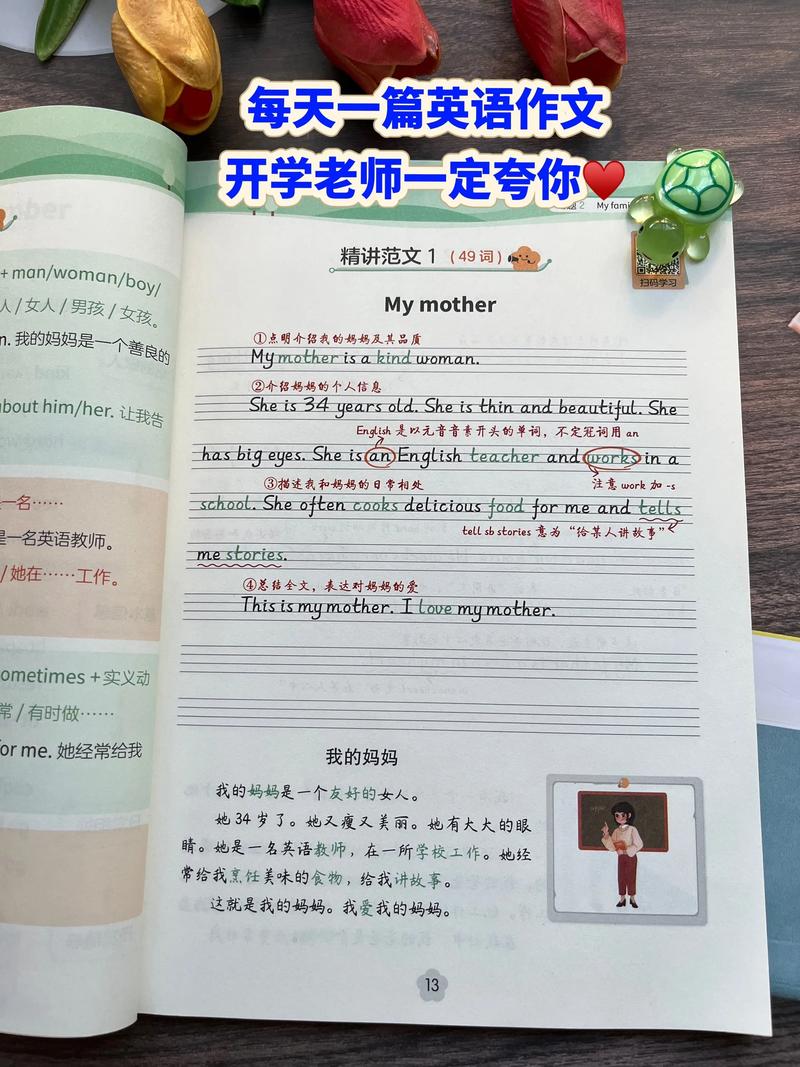
My Opinion: Nowadays, mobile phones have become an indispensable part of our daily life. However, when it comes to whether students should be allowed to use them at school, people hold different views. As far as I am concerned, students should not be permitted to use mobile phones during school hours.
Reasons: Firstly, mobile phones can be a major distraction. It is very tempting for students to check messages, play games, or browse social media instead of focusing on their lessons. This will undoubtedly have a negative impact on their academic performance. Secondly, the use of mobile phones may hinder face-to-face communication. Students might prefer to chat with friends online rather than interacting with classmates and teachers in person, which is detrimental to developing their social skills.
Conclusion: In conclusion, while mobile phones are useful tools, they should be banned from school classrooms to ensure a focused learning environment. Schools should encourage students to use their phones in designated areas or after school hours. Only in this way can students concentrate on their studies and develop healthy interpersonal relationships.
范文2:记叙文 - 一次难忘的经历
Topic: An Unforgettable Experience
Introduction: Life is full of memorable moments, but one experience that stands out in my mind is the time I participated in my school's English speech competition last year. It was a challenging yet rewarding journey that taught me the importance of courage and perseverance.
Body: At first, I was terrified of public speaking. My hands would sweat and my mind would go blank whenever I had to speak in front of a large audience. However, my English teacher encouraged me to give it a try. I spent weeks preparing my speech, writing and rewriting it countless times, and practicing in front of a mirror. On the day of the competition, my heart was pounding as I walked onto the stage. But when I saw my teacher's encouraging smile in the audience, I took a deep breath and began to speak. To my surprise, I delivered the speech smoothly and even won the third prize.
Conclusion: That experience was unforgettable not because of the prize, but because it helped me overcome my fear. It taught me that with enough preparation and a positive mindset, I can face any challenge with confidence. This lesson will stay with me for the rest of my life.
第四部分:给学生的实用建议
- 多读多背: 阅读优秀的英语文章,积累好词好句和地道的表达,背诵一些经典的段落,写作时就能信手拈来。
- 坚持写日记: 这是最简单的练习方式,每天用英语写几句话,记录当天发生的事或自己的想法,不必在乎语法,关键是培养语感。
- 模仿与改写: 找到一篇你喜欢的范文,尝试模仿它的结构和句式,然后用你自己的话题和内容进行改写。
- 使用工具: 善用词典(如欧路词典、Merriam-Webster)和语法检查工具(如Grammarly),但不要完全依赖它们,要理解为什么错了。
- 寻求反馈: 请老师或英语好的同学帮你修改作文,他们的反馈能让你发现自己的盲点。
记住:写作是一个不断练习和进步的过程,不要害怕犯错,每一次写作都是一次成长,祝你写作愉快,取得好成绩!