英语作文连接词如何用才不显生硬?
作文示例 2026年1月10日 20:52:19 99ANYc3cd6
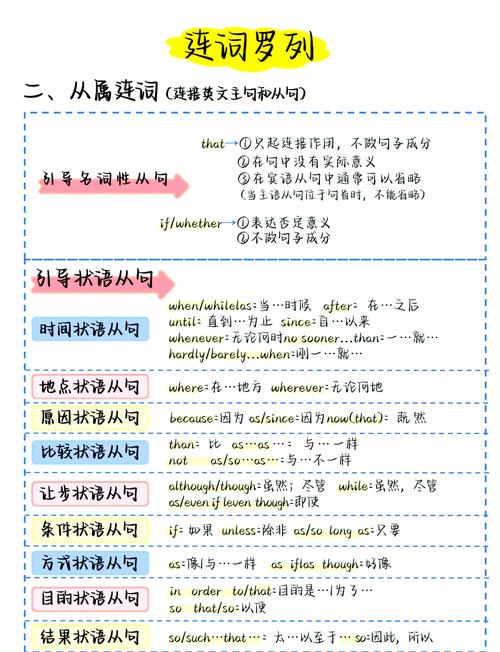
英语作文中的连接词是提升文章逻辑性、流畅度和专业度的“粘合剂”,它们能清晰地告诉读者句子与句子、段落与段落之间的关系,使你的论点更有说服力。
下面我将连接词按照它们在文章中起到的逻辑功能进行分类,并提供清晰的解释和例句,方便你理解和记忆。
(图片来源网络,侵删)
按功能分类的连接词
表示“补充”或“递进” (Adding / Showing Similarity)
这类连接词用来增加新的信息,或者对前一个观点进行补充说明,表示“、“、“同样地”。
| 连接词 | 级别 | 用法与例句 |
|---|---|---|
| And | 基础 | 最简单的连接词,连接词、短语或句子。 例:He is intelligent, and he works very hard. |
| Furthermore / Moreover | 中级 | 用于连接句子,语气比 "and" 更正式,表示“、“。 例:The plan is risky. Furthermore, it is very expensive. |
| In addition / Additionally | 中级 | 表示“、“除……之外”,引出另一个重要观点。 例:She has a lot of work to do. In addition, she needs to take care of her family. |
| Not only... but also... | 中级 | 连接两个并列的成分,表示“不仅………”。 例:He is not only a talented writer but also a great speaker. |
| What's more / Besides | 中级 | 口语和书面语中常用,表示“更有甚者”、“。 例:The hotel is in a great location. What's more, the service is excellent. |
表示“对比”或“转折” (Contrasting / Showing Difference)
这类连接词用来引出与前一个观点相反或不同的信息,表示“、“、“相反”。
| 连接词 | 级别 | 用法与例句 |
|---|---|---|
| But | 基础 | 最常用的转折词,连接两个意思相反的句子。 例:He is very rich, but he is not happy. |
| However | 中级 | 句子级转折,语气比 "but" 更正式,通常用逗号隔开。 例:The experiment was a failure. However, we learned a lot from it. |
| In contrast / By contrast | 中级 | 用于对比两个截然不同的事物或观点。 例:Living in the city is exciting. In contrast, life in the countryside is peaceful. |
| On the other hand | 中级 | 表示“,常与 "on the one hand" 连用,展示事物的两面性。 例:Online courses are convenient. On the other hand, they lack face-to-face interaction. |
| Nevertheless / Nonetheless | 高级 | 语气非常正式,表示“尽管如此”、“,引出一个出人意料的结论。 例:The company is facing financial difficulties. Nevertheless, it plans to expand its business. |
| While / Whereas | 中级 | 用于从句中,直接对比两个事物的不同之处。 例:While I enjoy reading, my sister prefers watching movies. |
表示“因果” (Showing Cause and Effect)
这类连接词用来解释原因或说明结果,使论证更有条理。
| 连接词 | 级别 | 用法与例句 |
|---|---|---|
| Because / Since / As | 基础 | 引导原因状语从句。 例:Because he was late, he missed the train. |
| Therefore / Thus | 中级 | 引导结果,通常位于句首或句中,用逗号隔开。 例:The traffic was terrible. Therefore, we arrived late. |
| Consequently / As a result | 中级 | 表示“、“结果是”,引出一个直接的结果。 例:He didn't study hard. As a result, he failed the exam. |
| Due to / Owing to | 中级 | 后面接名词或名词短语,表示“由于”。 例:The flight was delayed due to bad weather. |
| Hence | 高级 | 较为正式,表示“、“,常用于学术写作。 例:The evidence is unreliable; hence the conclusion is invalid. |
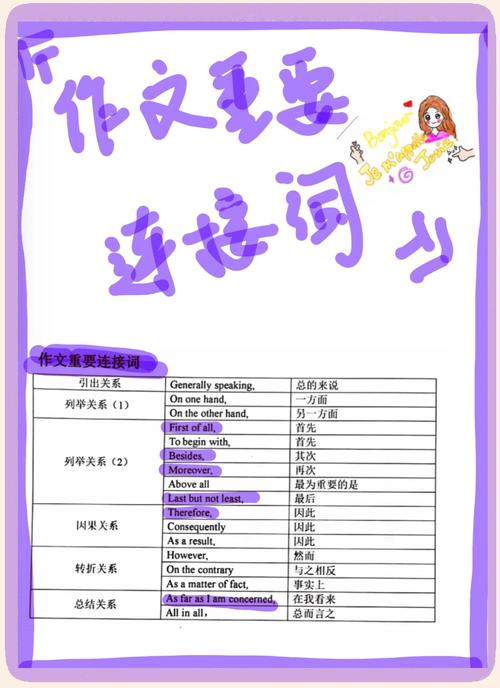
表示“举例” (Giving Examples)
这类连接词用来为你的观点提供具体的例子,使论证更具体、更有说服力。
(图片来源网络,侵删)
| 连接词 | 级别 | 用法与例句 |
|---|---|---|
| For example / For instance | 基础 | 用于引出具体的例子,后面常跟逗号。 例:Many countries have strict laws to protect the environment. For example, Germany has a high recycling rate. |
| Such as | 基础 | 用于列举同类事物,相当于“。 例:I enjoy various outdoor activities, such as hiking and camping. |
| To illustrate | 中级 | 表示“为了说明”,引出一个例子来阐释前面的观点。 例:The city is facing a serious housing crisis. To illustrate, the average waiting time for public housing is over five years. |
表示“或“ (Summarizing or Concluding)
这类连接词通常用在段落的末尾或文章的结尾,用来总结要点或得出结论。
| 连接词 | 级别 | 用法与例句 |
|---|---|---|
| In conclusion / To conclude | 中级 | 最常见的总结性短语,用于文章结尾。 例:In conclusion, we must take immediate action to protect our planet. |
| In summary | 中级 | 意思与 "in conclusion" 相近,表示“。 例:In summary, the key to success is hard work and perseverance. |
| Overall / All in all | 中级 | 表示“、“大体上”,可用于段落或文章结尾。 例:Overall, the trip was a wonderful experience. |
| To sum up | 中级 | “,简洁的总结方式。 例:To sum up, the advantages of this plan outweigh its disadvantages. |
表示“顺序”或“序列” (Showing Sequence or Order)
这类连接词用来按时间或逻辑顺序组织信息,常用于过程描述或列举要点。
| 连接词 | 级别 | 用法与例句 |
|---|---|---|
| First(ly), Second(ly), Third(ly)... | 基础 | 用于列举要点,"Firstly" 比 "First" 更正式。 例:Firstly, heat the oven to 180°C. Secondly, mix the ingredients. |
| Then / Next | 基础 | 表示“、“,用于描述步骤。 例:Add the flour to the bowl. Then, mix it well. |
| Finally / Lastly | 基础 | 表示“、“终于”,用于序列的最后一项。 例:Finally, pour the mixture into the baking pan. |
| Subsequently | 高级 | 表示“随后”、“,比 "then" 更正式。 例:He signed the contract and subsequently started the project. |
高级技巧:如何灵活运用连接词
- 避免重复:不要在文章中反复使用同一个连接词,如果第一段用了 "However",第二段可以尝试用 "In contrast" 或 "Nevertheless"。
- 注意位置:
- 句首:如
However, ...,Therefore, ...,For example, ... - 句中:如
He is intelligent, and hardworking.(用逗号隔开) - 句末:如
The plan is risky, however.(这种用法较少,不如句首正式)
- 句首:如
- 理解逻辑关系:不要为了用连接词而用,首先要想清楚句子之间是什么关系(是补充?是转折?还是因果?),然后再选择最合适的词。
- 段落间的过渡:除了句子间的连接词,段落之间也需要过渡句,上一段的结尾句可以引出下一段的主题。
- 例如:上一段讨论了优点,下一段要讨论缺点,可以这样过渡:
While the benefits of this policy are clear, it also has several drawbacks.(尽管这项政策的益处很明显,但它也有一些弊端。)
- 例如:上一段讨论了优点,下一段要讨论缺点,可以这样过渡:
实用练习
尝试用不同的连接词改写下面的句子,感受它们之间的细微差别。
原句:Online education is convenient. It lacks face-to-face interaction.
改写:
- 补充:Online education is convenient; moreover, it is often more affordable.
- 转折:Online education is convenient. However, it lacks face-to-face interaction.
- 对比:Online education is convenient. In contrast, traditional education offers more direct communication.
- 因果:Online education is popular because it offers great flexibility.
- 举例:Online education has many benefits; for instance, students can learn at their own pace.
希望这份详细的指南能帮助你写出逻辑清晰、语言流畅的英语作文!祝你写作顺利!