英语作文 人生规划
作文示例 2026年1月5日 05:46:38 99ANYc3cd6
范文 1:经典结构版
The Compass of Life: Charting Your Course with a Plan**
Life, often compared to a vast and unpredictable ocean, can be both exhilarating and daunting. Without a map or a compass, one can easily drift aimlessly, tossed by the waves of circumstance. This is the profound importance of a life plan. It is not a rigid, unchangeable script, but rather a flexible compass that guides us, helping us navigate towards our desired destination and live a more purposeful and fulfilling existence.
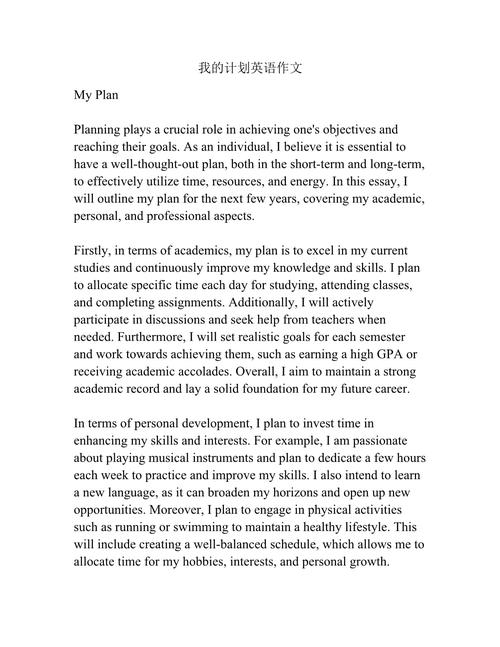
A well-crafted life plan begins with deep self-reflection. We must first understand who we are and what truly matters to us. This involves identifying our core values, passions, strengths, and weaknesses. Are we driven by a desire to help others, to create beauty, to achieve financial security, or to explore the unknown? By answering these fundamental questions, we establish the "why" behind our journey. This self-awareness is the foundation upon which all other plans are built. It acts as an internal filter, helping us distinguish between opportunities that align with our true selves and those that are mere distractions.
With a clear sense of self, the next step is to set tangible goals. A life plan without goals is like a ship without a destination; it has the power to move but nowhere to go. Goals give our efforts direction and a measurable way to track our progress. I find the SMART framework incredibly useful: goals should be Specific, Measurable, Achievable, Relevant, and Time-bound. For instance, instead of a vague wish like "I want to learn a new language," a SMART goal would be "I will achieve conversational proficiency in Spanish by the end of this year by taking a weekly class and practicing for 30 minutes daily." Such clarity transforms abstract dreams into actionable steps.
However, the most crucial element of any life plan is flexibility. Life is inherently dynamic, and no plan can foresee every storm or unexpected current. A sudden career shift, a global pandemic, or a personal loss can completely alter our course. Therefore, a life plan should be a living document, not a tombstone. It requires regular review and adjustment. We must be willing to adapt our goals, learn from setbacks, and embrace new opportunities that may not have been part of the original design. This resilience and adaptability are what ultimately separate a successful journey from a failed one.
In conclusion, creating a life plan is an act of empowerment. It is about taking the helm of our own ship and consciously deciding the direction we want to sail. It provides a sense of purpose, a framework for decision-making, and the courage to pursue our dreams. While the winds of change may blow, a life plan ensures that we are not merely passengers, but active, intentional navigators of our own destiny. It is the compass that helps us find our way, not just through life, but to a life well-lived.
中文翻译
人生的指南针:用规划为你指引航向
人生常被比作一片广阔而不可预测的海洋,它既令人兴奋,又令人畏惧,如果没有地图或指南针,人很容易随波逐流,被环境的浪潮所摆布,这就是人生规划的深远意义所在,它并非一成不变、刻板僵化的剧本,而是一个灵活的指南针,它能指引我们,帮助我们驶向向往的彼岸,活得更富有目标感和成就感。
一份精心制定的人生规划始于深刻的自我反思,我们必须首先了解自己,以及什么才是真正重要的,这包括识别我们的核心价值观、热情、优点和缺点,我们是受助人为乐的驱动,还是创造美的渴望?是追求财务安全,还是探索未知?通过回答这些基本问题,我们为旅程确立了“为什么”,这种自我意识是所有其他规划的基础,它像一个内部的过滤器,帮助我们区分那些与真实自我相符的机会和那些只会分散我们精力的干扰。
在清晰地认识自我之后,下一步就是设定具体可行的目标,没有目标的人生规划就像一艘没有目的地的船;它有动力,却无处可去,目标为我们的努力提供了方向,也让我们能够衡量自己的进展,我发现 SMART 框架非常有用:目标应该是 Specific (具体的), Measurable (可衡量的), Achievable (可实现的), Relevant (相关的), 和 Time-bound (有时间限制的),与其许下“我想学一门新语言”这样模糊的愿望,不如设定一个SMART目标:“我将在今年年底前,通过每周上一节语言课并每天练习30分钟,达到西班牙语的日常会话水平。” 这样的清晰性将抽象的梦想转化为可执行的步骤。
任何人生规划中最关键的因素是灵活性,人生本质上是动态的,没有任何计划能预见到每一场风暴或意想不到的暗流,一次突如其来的职业转变、一场全球性的大流行病,或是一次个人变故,都可能完全改变我们的航向,人生规划应该是一份“活”的文件,而不是一块墓碑,它需要定期审视和调整,我们必须愿意调整自己的目标,从挫折中吸取教训,并拥抱那些可能不在原始设计中的新机会,这种韧性和适应力,最终将成功的旅程与失败的旅程区分开来。
制定人生规划是一种赋权行为,这是要我们自己掌舵,有意识地决定想要航行的方向,它赋予我们目标感、决策的框架,以及追求梦想的勇气,尽管变革的风可能会吹,但人生规划确保我们不仅仅是乘客,而是自己命运的积极而有意识的领航员,它是帮助我们找到道路的指南针,不仅是穿越人生的道路,更是通往一种充实而有意义的人生的道路。
核心词汇与短语
- Profound importance: 深远的意义
- Vast and unpredictable ocean: 广阔而不可预测的海洋 (比喻人生)
- Drift aimlessly: 随波逐流,漫无目的地漂泊
- Rigid, unchangeable script: 刻板、一成不变的剧本
- Flexible compass: 灵活的指南针
- Purposeful and fulfilling existence: 有目标感和成就感的人生
- Deep self-reflection: 深刻的自我反思
- Core values, passions, strengths, and weaknesses: 核心价值观、热情、优点和缺点
- Internal filter: 内部过滤器
- Tangible goals: 具体可行的目标
- Actionable steps: 可执行的步骤
- SMART framework: SMART框架 (一种目标设定方法)
- Conversational proficiency: 日常会话水平
- Flexibility / Adaptability: 灵活性 / 适应力
- Living document: “活”的文件 (比喻需要不断更新的文档)
- Resilience: 韧性,恢复力
- An act of empowerment: 一种赋权行为
- Take the helm: 掌舵,掌管
- Intentional navigators: 有意识的领航员
- A life well-lived: 一种充实而有意义的人生
写作思路解析
这篇范文采用了经典的“总-分-总”结构,逻辑清晰,论证有力。
-
- 比喻开篇: 用“海洋”比喻人生,用“指南针”比喻人生规划,生动形象,引人入胜。
- 提出观点: 明确指出人生规划不是束缚,而是指引,能帮助我们活得更充实。
-
主体段落 1: 自我认知
- 主题句: 人生规划始于自我反思。
- 论证: 解释了自我认知包括哪些方面(价值观、热情等),并强调其重要性是“基础”和“过滤器”,这是规划的起点,决定了你的“为什么”。
-
主体段落 2: 设定目标
- 主题句: 在认识自我后,要设定具体目标。
- 论证: 用“船与目的地”的比喻说明目标的重要性,然后引入具体的 SMART 框架,并用一个实例(学西班牙语)来展示如何将模糊的愿望转化为清晰的目标,使论证更具说服力。
-
主体段落 3: 保持灵活
- 主题句: 人生规划最关键的是灵活性。
- 论证: 承认人生的不确定性(风暴、变故),指出规划不是一成不变的,用“活文件”和“墓碑”的对比强调规划的动态性,强调适应力和韧性是成功的关键。
-
- 总结观点: 重申人生规划是一种“赋权”行为。
- 升华主题: 将规划者比作“领航员”,而不是“乘客”,再次呼应开头的“海洋”比喻,使文章结构完整,意境升华。
- 发出号召/展望未来: 鼓励大家成为自己人生的主动掌控者,活出意义。
更多写作素材与角度
如果你需要从不同角度来写这篇作文,可以考虑以下素材:
更侧重于“为什么”需要规划
- 对抗焦虑: 规划能减少对未来的不确定性和恐惧,带来内心的平静。
- 提高效率: 明确的目标让我们能集中精力,避免在无关紧要的事情上浪费时间。
- 衡量成功: 规划为“成功”提供了定义,让我们能清晰地看到自己的成长和进步,而不是被社会的标准所绑架。
- 避免遗憾: 有规划的人生可以确保我们不会在年老时回首,因虚度光阴或错失机会而感到遗憾。
更侧重于“如何”做规划
- 长期、中期、短期目标: 将宏大的长期目标(如“成为领域专家”)分解为可执行的中期(如“5年内获得硕士学位”)和短期目标(如“本季度读完3本专业书籍”)。
- 平衡生活: 规划不应只限于事业,可以包括个人成长(学习新技能)、健康(每周运动3次)、人际关系(每月与家人聚会)、财务(储蓄计划)等多个维度。
- 定期复盘: 强调每年、每季度甚至每月回顾计划的重要性,庆祝已取得的成就,并调整未完成的目标。
更侧重于“反对”过度规划
- 规划的弊端: 过度详细的规划可能导致“分析瘫痪”(analysis paralysis),让人因为害怕偏离计划而不敢行动。
- 拥抱意外: 生命中最好的机遇有时恰恰来自于计划之外的“意外”,保持开放的心态,允许生活带来惊喜。
- 过程重于结果: 人生的价值不仅在于达成预设的目标,更在于探索、学习和成长的过程本身,规划应是服务于这个过程,而不是束缚它。
你可以根据你的个人经历和观点,将以上素材融入到你的作文中,使其更具个性和深度,祝你写作顺利!